Clocks back, mats out: closing the British golf season without neglecting the winter
Most British golfers slide from summer medals into winter Stablefords without closing anything. A fortnight of small jobs after the last summer competition protects the clubs and the scoring record, and gives one winter project a date and a place.

In brief
- Decide first whether you are playing on, playing occasionally or stopping: the close-down is different for each.
- Read the winter rules notice: preferred lies (Model Local Rule E-3) and fairway mats (E-12) change how the course plays.
- Your Index uses the lowest eight of your last twenty differentials, however old, and the playing conditions calculation can add up to three strokes on a hard winter day.
- Keep clubs and balls in the house, not a shed, garage or car boot.
- Rest three weeks, then give one change four months before the clocks go forward on 28 March 2027.
British golf rarely stops. It changes gear. The clocks go back on 25 October 2026, the Saturday medal gives way to winter Stablefords, mats appear on the fairways and, on heavier inland clay, the flags move to temporary greens cut into the approaches. Many golfers drift from one mode into the other without noticing, and that is exactly why the clubs, the handicap record and the swing all come out of winter a little worse than they went in.
Treat the weekend after your club’s last summer competition as a line in the diary. A couple of hours spread over the following fortnight does more for next April than any lesson booked in March.
First, decide what kind of winter you are having
The right close-down depends on how much you will play between November and March, so answer that before anything else.
Playing on, most weekends. Plenty of British courses stay open all year. Edinburgh Leisure, which runs the city’s public courses, keeps them open through the winter when the weather allows, although at Braid Hills in January the tee sheet only runs from 9am to 2.30pm. If that is you, the job is a mid-season service rather than a shutdown.
Playing occasionally. A handful of rounds on mild days, perhaps a winter break abroad. You need the clubs clean and ready, and a plan for the months in between.
Stopping altogether. Common on waterlogged parkland, and a perfectly sensible choice. Then the storage section below matters most.
Whichever it is, the winter course is not the summer course. Committees can bring in Model Local Rules for the season, notably preferred lies (E-3), which lets you lift, clean and place within a set distance on the fairway, and compulsory fairway mats (E-12), under which a ball on closely mown grass is played from a mat, except when you use a putter. Read the notice board in October, not on the first tee in December.
The kitchen-floor clean
Tip the whole bag out on newspaper. It is the only way to find the soggy glove, the scorecards from May and the pencil stubs that have been sitting in water since the August thunderstorm.
Heads go into a bucket of warm water with washing-up liquid for a few minutes. A soft brush does the faces; a wooden tee cleans the grooves without scratching them, which a wire brush will. Dry every head and ferrule with a towel, because a wet hosel left in a damp bag is where rust starts.
Then do the part nearly everyone skips: the grips. A lot of what feels like a worn, slippery grip after a British summer is sun cream, sweat and grime. The same warm soapy water and a nail brush, a rinse, and a night standing upright to dry often restore enough tack for a few more months. If the rubber is cracked, shiny at the thumb or turning in your hand, washing will not save it and a regrip is due.
Waterproofs deserve ten minutes too. Mud clogs the membrane, so wash the jacket and trousers following the label’s care instructions before they go into a cupboard.
Where the clubs spend December
A garden shed or an unheated garage goes through repeated freeze and thaw in a British winter, and damp gets into everything. Cold leaves grips hard and glassy, glove leather stiff and cracked, and the epoxy holding each head on does not enjoy the cycle either. A car boot is no better, and it is also where clubs get stolen.
The simplest answer is a cupboard or the space under the stairs, bag upright and pockets unzipped so they air. Take the balls indoors as well. A ball that has sat below freezing flies shorter until it warms up, which makes a cold January round feel even less rewarding than it already is.
If you keep playing, a spare towel in the bag and a habit of drying the heads after each round does the same job week to week.
The scoring record: what counts and what does not
Under the World Handicap System your Handicap Index is the average of the lowest eight Score Differentials among your most recent twenty. Two consequences matter at the end of the summer.
First, a score stays in that record for as long as it is among your last twenty, however old it gets. Your best rounds of July will still be counting in March if you play little over the winter, so a missing good card really does cost you.
Second, winter scoring is built into the system. The playing conditions calculation compares the scores returned on a course each day against what the field would be expected to shoot, and when at least eight acceptable scores are in it can adjust every Score Differential by up to three strokes for a hard day. A cold, wet Stableford on mats is not wasted: if everyone struggled, the arithmetic knows.
So before the summer is fully behind you, check that every card you should have submitted is in, including general play rounds and nine-hole scores. If your club uses winter rules, ask the handicap secretary which winter competitions it treats as qualifying, rather than guessing.
Let the season’s numbers choose the project
If you tracked anything this year, whether on a GPS watch, an app or pencil ticks on the card, add it up now while you still remember the rounds behind the figures. Five totals are enough: fairways hit, greens hit, three-putts, up-and-downs and penalty strokes.
Compare them with what you believed about your game. Golfers who are convinced the driver is the problem regularly find that the three-putt count is the number out of line. One figure will look worse than the rest, and that figure is your winter.
If you tracked nothing, write down the last five rounds from memory and mark where each double bogey came from. It is rough, but it beats choosing a project on mood.
Book the bench work while nobody else is
Autumn is the quiet period for club repairs and fittings, and it pays to book before the pre-season rush.
- Regrips. On a large British golf retailer’s website in September 2026, a Golf Pride Tour Velvet Align was listed at £14.99 and a Golf Pride CPX at £12.99, with a buy six, get one free offer on grips. Prices move, so check on the day.
- A free check first. A specialist shop in Stanmore offers a free fifteen-minute walk-in diagnostic that covers grip wear, loft gaps and lie angles.
- A proper fitting. One specialist runs custom fit centres in Warrington, Manchester and Soho, and treats the fitting fee as a deposit refunded when you buy custom clubs. A worn wedge or a loft gap you kept noticing in August is exactly what a winter fitting is for.
Your own club professional can usually handle regrips and loft and lie checks as well, and keeps the money at the club where you play.
Rest before you rebuild
Three or four weeks without a club in your hands is not lost ground. Minor aches settle, and the appetite for practice comes back. Golfers who go straight from the last medal into a winter of range sessions tend to reach March already bored with the project that was meant to carry them into spring.
If something has hurt for most of the season, a physiotherapist or your GP is the right first stop, not a swing coach. That is beyond what any article can sort out.
One change, four months, a place to do it
Pick a single project. Not a new grip plus a new putting stroke plus a fitness plan: one. Four months is roughly how long a change takes to stop feeling strange, and that is the winter’s real gift. A change made in April costs you the summer; the same change started in December is settled by the time the clocks go forward on 28 March 2027.
Then fix where and when you will work on it, because short, dark British evenings kill vague intentions. Floodlit ranges with ball tracking make evening practice realistic. Hoebridge Golf Centre in Surrey has Trackman in its bays and lists a Premium Bay at £20 an hour with unlimited balls; Trafford Golf Centre in Manchester has 53 Toptracer bays and stays open until at least 11pm every night. A launch monitor at home is the alternative if the project is about strike or speed.
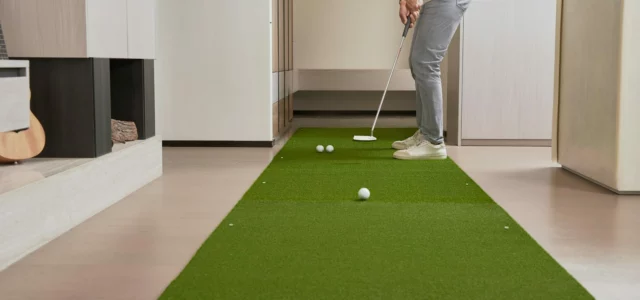
On the coldest days, bear in mind that the UK Health Security Agency and the Met Office run cold-weather health alerts, with a core season from 1 November to 31 March. An alert in your area is a good reason to swap the frosty nine holes for the range or the putting mat.
Panxis Golf has no commercial relationship with any retailer, centre or course named here.
Ten minutes with a notebook
Before the season fades from memory, write down three lines. What genuinely got better, with the evidence. What cost the most shots, taken from the totals rather than from feel. And what you promised yourself you would work on last spring and never did.
That last line is the uncomfortable one, and the useful one. Then add the winter project, the day you will start and the place you will do it. A plan with a date and a venue survives January; a resolution usually does not.
A fortnight, day by day
- Weekend one: empty and wash the bag, heads, grips and waterproofs.
- Midweek: move clubs and balls indoors, or set up a drying routine if you are playing on.
- Next evening: check that every card is submitted and total the season’s five numbers.
- Same week: book the regrip, the free check or the fitting.
- Weekend two: read the club’s winter rules notice, then put the clubs down for three weeks.
- Early December: start the one project, at a named range, on a named night.
How this page was put together
Prices and offers were noted in September 2026 on the American Golf website. The free-check and fitting-fee terms came from GolfInStore (Golf Online’s shop) and Clubhouse Golf. Panxis has no commercial link with these retailers.