One British course, four seasons: soft springs, running Augusts, leafy Octobers and winter mats
The same parkland course plays like a different game in March and August. Plan around the clocks changing, take more club on soft spring ground, putt firmly through greens work, use the roll in summer and read the notice board for preferred lies and mats.
In brief
- At Braid Hills, opening hours run from 09.00 to 14.30 in January and 07.00 to 19.40 from May to August.
- Soft spring ground and cold air can cost a club on approaches; aim for the middle of the green.
- Model Local Rules E-3, E-4 and E-12 cover preferred lies, aeration holes and compulsory mats.
- In summer, land it short and chip low; bunkers you never reach in April come into play.
- In autumn, announce provisionals, avoid leafy edges and expect plugged approaches in the morning.
A British parkland course in late March and the same course on a dry August afternoon are barely the same game. The holes have not moved; the ground, the grass, the daylight and the local rules have. Golfers who lose shots in spring and autumn often blame their swing when the real problem is that they played April with August’s numbers.
Every club golfer has the same free information available: the notice board, the course status page and the ground under their feet. This page goes through the British year and what each part of it asks you to change.
Daylight sets the calendar before the weather does
The first seasonal variable in Britain is not temperature but light. Edinburgh Leisure’s opening hours for Braid Hills show the range neatly: in January the course is open from 09.00 to 14.30, while from May to August it runs from 07.00 to 19.40, with a twilight window at the end of each day.
The clocks going forward on the last Sunday in March, 28 March in 2027 according to GOV.UK, is when after-work golf becomes possible again, and the clocks going back on the last Sunday in October, 31 October in 2027, is when it ends. Plan your nine-hole evenings, your midweek medals and your practice around those two dates, not around when it starts to feel warm.
Late winter into spring: soft ground, short shots
Wet British soil in March and April holds the ball where it lands. A drive that ran out happily in summer stops almost dead, and cold, dense air takes a little off carry as well. Together they can cost a club on approach shots and noticeably more off the tee.
- Take at least one more club than the yardage suggests on approaches.
- Aim for the middle of the green: soft surfaces mean a ball that lands pin high stays pin high.
- Expect no run on a drive you normally hit past a fairway bunker; it may now finish in it.
Spring is also when winter measures linger. A committee can bring in Model Local Rule E-3, preferred lies, letting you place the ball within a set distance, typically a club-length, a scorecard or six inches. Under E-12, it can make fairway mats compulsory. Temporary tees and greens shorten the course; accept them, because the alternative is turf that never recovers for the summer.
Greens work: the fortnight everyone grumbles about
Hollow tining, scarifying and top dressing leave greens sandy and bumpy for a couple of weeks and noticeably better for the rest of the year. Ask your club when it is due, and look for a course status notice; on the morning this page was updated, Hoebridge Golf Centre’s course status line read “Main – Greens work in progress”, while its other two courses were open.
How to handle it:
- Putt firmly. A ball rolling with pace is knocked about less by sand and holes than one dying at the cup.
- Know the relief. Model Local Rule E-4 allows a committee to give relief from aeration holes. Check the notice board rather than assuming it applies.
- Plan around it. Ask for the dates early, and avoid booking a society day, a club championship qualifier or a round with important guests in that window. If you are aiming at the club championship, find out whether its qualifying rounds clash.
Summer: firm, fast and running
When the ground dries out, fairways add yards of roll. A bunker that was irrelevant in April can come into play from the tee in August, and the driver that was right in spring can be the wrong club on a firm, running hole.
Around the greens, the priorities flip. Firm, quicker surfaces are harder to stop a lofted shot on, so the low running chip becomes the percentage play and the high flop becomes the gamble. On approaches, land the ball short of the flag and let it release; with a back pin on a hard green, the front half of the green is often the smart target.
On links courses, firmness is less a season than a way of life, and wind is the bigger variable. A low, controlled ball flight pays all year there, and summer simply exaggerates it.
Autumn: leaves, dew and wet mornings
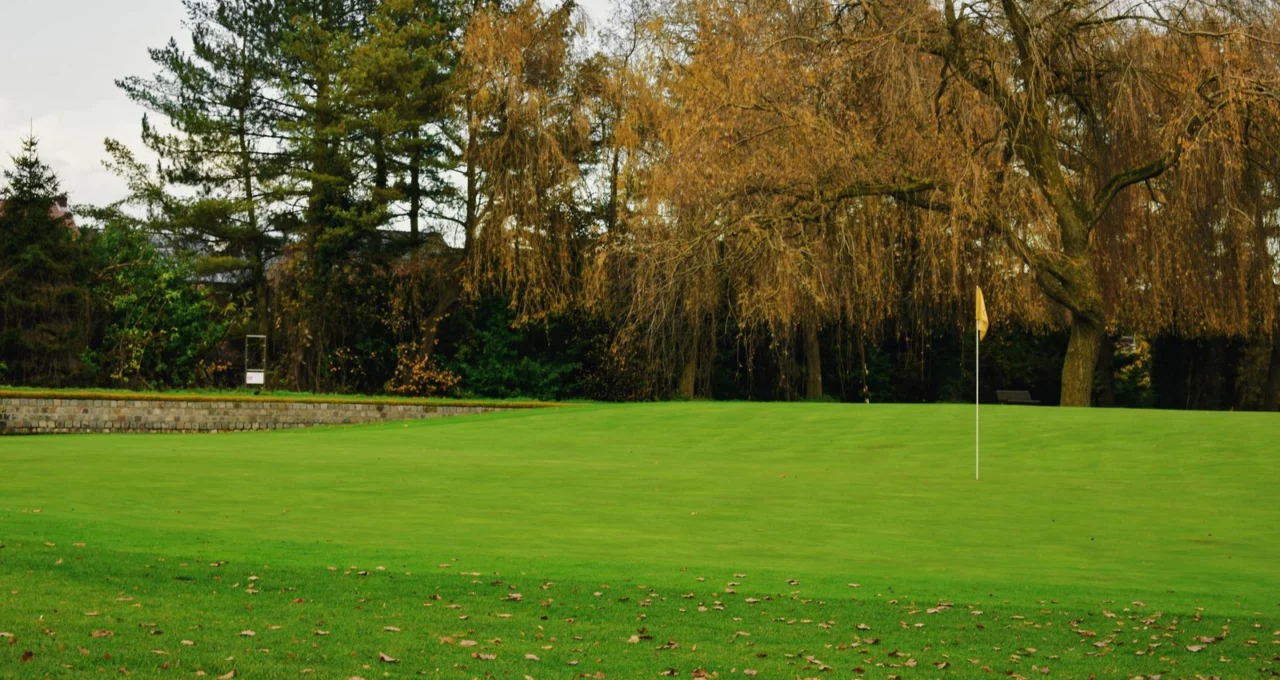
October brings the most frustrating lost ball in golf: the one that is definitely on the fairway and definitely under a layer of leaves. Heavy dew and wet rough mean less roll and more mud on the ball in the morning, even when afternoons are still lovely.
- Hit a provisional ball more readily. Under Rule 18.3, you have to announce it as a provisional before you play it; our guide to the Rules golfers get wrong covers the detail.
- Aim away from tree-lined edges where leaves pile up.
- Expect approaches to plug on soft greens in the morning and to release more after lunch.
- Check the notice board: preferred lies may return as the ground softens.
Autumn has its rewards. Once the summer competition calendar winds down, a dry October afternoon can be as good as golf gets in Britain.
Winter: mats, temporary greens and frost
Where a British course stays open through the winter, it usually does so in a reduced form, with mats, temporary greens and preferred lies. Scores are not comparable with summer, and they are not meant to be. What winter golf is good for is keeping the body moving and grooving a low, penetrating ball flight that pays off again in a March wind.
Frost delays are the one thing not to argue about. Walking on frozen greens damages the grass, and the hour you wait in the clubhouse in January is part of why those greens are playable in May.
Five seconds of ground reading
The quickest way to calibrate for the day costs nothing:
- Push a tee peg into the fairway. If it slides in easily, the ball will not run; if you have to work at it, allow for roll.
- Look at the surface of the practice green. A dull, damp look usually means slow; bright and dry usually means quicker.
- Watch the first approach of the day, anyone’s, and see whether it checks or releases.
- Read the notice board for preferred lies, mats, temporary greens and aeration relief before you tee off.
Do this on the first tee and you start the round calibrated. Most golfers work it out on the back nine, after it has cost them.
Where this matters most in Britain
The biggest seasonal swing is on heavy inland soils. Clay-based parkland courses can play very differently between a wet spring and a dry summer, and their maintenance calendar decides which weeks are worth booking for anything important. Look for a course status notice on the club’s website, or ring the pro shop, before you book.
Sandy links land behaves differently. Courses on the coasts of Fife, East Lothian, Lancashire, Kent and Wales drain far more quickly than inland clay and are more likely to stay firm when parkland courses are soft, with wind rather than wet ground as the main variable.
Public operators can be good guides to the calendar. Edinburgh Leisure’s courses are open all year, weather permitting, publish month-by-month opening and twilight hours, and state that prices are correct from 1 April.
Panxis Golf has no commercial relationship with any course or operator mentioned here.
Your season in one list
- March and April: one club more, aim at the middle, expect no run, check for preferred lies.
- Greens work weeks: firm putts, check for aeration hole relief, nothing important in the diary.
- June to August: land it short, use the roll, chip low, rethink which bunkers are in play.
- October: provisionals announced, avoid leafy edges, expect plugged approaches before lunch.
- November to February: mats and temporary greens, low ball flight, patience with frost delays.
The course tells you how it is playing before you hit a shot. The golfers who listen to it score better all year; the rest spend spring wondering where their game went.