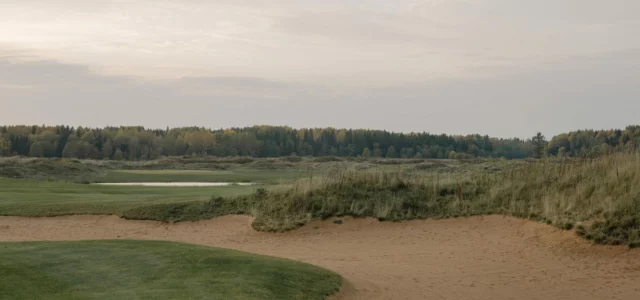
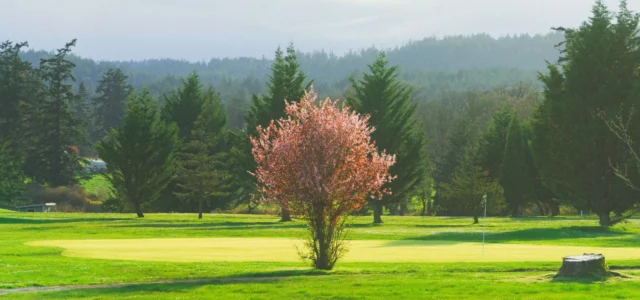
The same course plays four different ways a year
The same eighteen holes play as three or four different courses across a year. Push a tee into the fairway and look at the sheen on the green: five seconds of information worth more than any swing adjustment.
In brief
- Spring: one more club, no run, and greens that actually hold.
- Aeration weeks: putt firmly through the break and book nothing important.
- Summer: firm fairways bring bunkers back into play and favor the low chip.
- Autumn: leaf cover is the most common cause of a lost ball, so hit a provisional.
- In Florida and the desert the calendar inverts: peak season is January to April.
The same eighteen holes play as three or four different courses across a year, and most amateurs score badly in spring and autumn for reasons that have nothing to do with their swing. Knowing what the ground is doing is worth more than any adjustment to it.
This is one of the few areas of golf where the professional and the amateur have identical information available and only one of them uses it. A tour player checks the firmness of a fairway on the walk to the first tee. Most club golfers arrive at their ball, read the number on a rangefinder and hit the club that number always means, in February and in August alike.
Spring: soft, slow and longer than it looks
Fairways hold the ball where it lands, so a drive that ran out to 250 yards in August finishes at 225 in April. Greens are slow and receptive, so putts come up short and approach shots stop faster than expected.
Two separate things are costing you distance and they add up. Cold air is denser, and at 45 degrees a ball carries a few yards shorter than the same swing produces at 85. Soft ground removes the run on top of that. The combined effect on a mid-handicapper is close to a full club on approach shots and rather more than that off the tee.
The corrections are simple. Take one more club than the yardage suggests, aim at the middle of the green, and expect no roll on a drive over a bunker that you normally carry with room to spare. Soft greens are the compensation: a ball that would release twenty feet in July stops within a few paces in April, so an approach that finishes pin high is genuinely pin high.
Spring is also when temporary tees, roped-off wet areas and cart-path-only rules are most common, and all three lengthen a round. Play the shorter version of the course without complaining about it; the alternative is a course that never recovers for the summer.
Aeration: the fortnight everybody complains about
Hollow-tining and top dressing produce bumpy, sandy greens for two or three weeks and healthy ones for the following year. Most American clubs aerate greens in late spring and again in late summer, and the exact weeks are published in advance.
During that window, putts wobble, break less predictably and run slower over sand. The correct response is to putt firmly through the break rather than trying to die the ball at the hole, since a firmer putt is less affected by the surface, and to accept that some perfectly struck putts will move offline through no fault of yours.
The other correct response is scheduling. Look up your course’s aeration dates in March and do not book the club championship qualifier, the member-guest or the round with the visitors from out of town in that fortnight. Greens fees are often reduced during aeration, which is the compensation and a reasonable time to try a course you have not played.
Summer: firm, fast and running out
Firm fairways add twenty or thirty yards of run, which turns a comfortable carry over a bunker into a carry into one. The bunker that was never in play in April is exactly in play in August, and the driver that was the right club becomes the wrong one on several holes.
Greens get faster and harder to stop, so the low running chip becomes the sensible shot around them and the high soft one becomes the risky one. Approach shots should be landed short of the flag with the run accounted for, and playing to the front edge of a green is often the correct choice on a firm afternoon even with a back pin.
Summer is also the season for reading the wind properly, because a firm, fast golf course punishes a shot that gets held up in the air. And in the southern states, midsummer greens are managed defensively in extreme heat, which means slower surfaces than the same course produces in April.
Autumn: leaves, dew and the lost ball
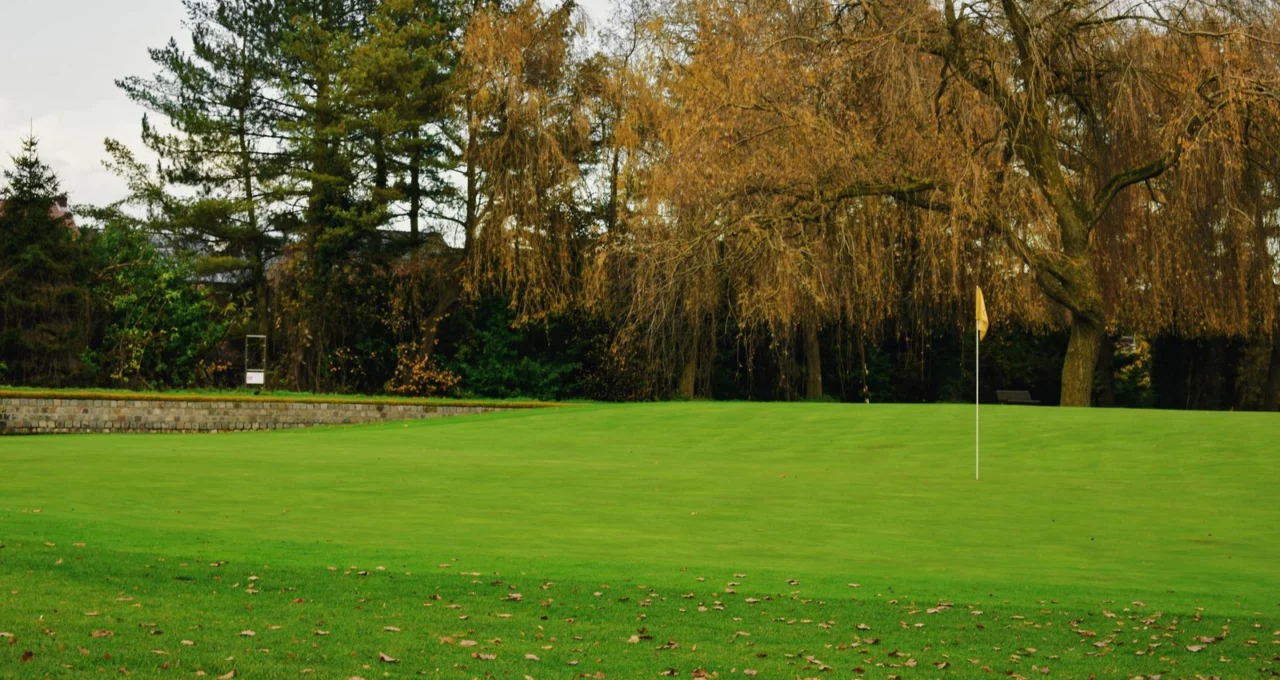
Wet mornings mean no roll and heavy rough, and leaf cover is the most common cause of a lost ball in October. A well-struck drive that finishes in the middle of a leaf-covered fairway can genuinely disappear.
Play a provisional more readily than at any other time of year, aim away from the tree line rather than flirting with it, and start the round accepting that the ball will plug on greens softened by rain. Preferred lies are common in autumn and are a local rule rather than a courtesy, so check the notice board.
The compensation is that autumn is frequently the best golf of the year: firm enough underfoot in the afternoon, empty tee sheets, and greens that have recovered from summer stress. The morning is the problem, not the season.
Winter golf, where it exists
Mats, temporary greens, preferred lies and no roll whatsoever. In the northern half of the country the season closes entirely; in the transition states it becomes intermittent; in Florida, Arizona and southern California winter is the high season and the arithmetic reverses, with overseeded fairways, peak rates and full tee sheets.
Where winter golf does exist in the North, the scoring is not comparable and is not meant to be. What winter rounds are good for is keeping the movement alive and practicing the low ball flight, which the conditions force on you anyway and which is a genuinely useful shot to own in March.
One practical rule: frost delays are not negotiable. Walking on frozen grass ruptures the cells and kills it, and the two hours you wait in the clubhouse in January are what makes the green playable in May.
Read the ground, not the yardage plate
The single habit that separates good seasonal players from the rest is checking the surface before choosing a club, and it takes five seconds.
Push a tee into the fairway: if it goes in easily the course is soft and the ball will not run, and if it resists you have run to account for. Look at the sheen on a green: dull and damp is slow, bright and dry is fast. Watch the first approach shot of the day land, whoever hits it, and note whether it checked or released.
Do it on the first hole, adjust, and you have the day’s calibration before it has cost you anything. Most golfers work it out around the twelfth.
Where this matters most in the U.S.
The seasonal swing is largest in the North and the Midwest, where a course can play a full club and a half longer in April than in July, and where the aeration and frost-delay calendar genuinely shapes when it is worth booking. State golf association websites and the courses’ own pages publish maintenance calendars, and it is worth a look before booking anything that matters.
In the transition zone, from the Carolinas across to Oklahoma, the harder problem is grass type rather than temperature: cool-season fairways and warm-season greens on the same property behave differently in the same week, and overseeding in autumn changes both.
In the desert Southwest and Florida, the calendar inverts. Peak conditions and peak rates run from January to April, summer means very early tee times and much cheaper golf, and the overseeding window in autumn closes courses or moves play to temporary surfaces for a fortnight. Booking a trip in that window is the classic visitor’s mistake, and every resort publishes its overseeding dates.
GolfNow and TeeOff show seasonal pricing across a region at a glance, which is a decent proxy for when local conditions are at their best. Panxis Golf has no commercial relationship with any course or platform mentioned here.
What to change, by season
- Spring: one more club, aim at the center, expect no run, trust the soft greens.
- Aeration weeks: firm putts, low expectations, and no important rounds booked.
- Summer: land it short, use the run, play the low chip, re-check which bunkers are in play.
- Autumn: provisional balls, avoid the leaves, expect plugged approaches in the morning.
- Every round: push a tee into the fairway on the first hole and look at the sheen on the green.
The course tells you what it is doing every day, for free, before you have hit a shot. Most golfers are too busy replaying their swing to look at it.