When summer golf ends in Australia: clean-up, stats, trade-ins and winter pennant
The Australian season fades rather than stops, so most golfers never close it. An hour of cleaning, a look at the numbers and a decision about winter, whether pennant, nine-hole rounds or one project, sets up a shorter, cheaper spring.

In brief
- Winter varies: Canberra averages a 0.1 °C minimum in July, Melbourne about nine wet days a month.
- Dormant couch fairways play differently: do not blame the swing for the ground.
- Clean heads and grips; store clubs and balls indoors, never in a hot car boot.
- Total the summer's stats and check every score is in under CONNECT.
- Winter golf is worth keeping: pennant runs May to July, and nine-hole rounds keep growing.
Australian golf does not have a clean end of season, and that is exactly why so few golfers ever close one. In Hobart or Canberra the last warm Saturday comp comes around April or May, and after that the mornings turn hard. In Sydney and Perth, winter mostly means shorter days. In Brisbane and the north, the calendar barely changes at all. Wherever you play, there is a point where summer golf finishes and something else starts, and an hour spent at that point makes the next spring shorter and cheaper.
This piece is about that hour, and about deciding what the colder months are for: a proper rest, a single project, winter competition, or all three.
Know which kind of winter you are heading into
The Bureau of Meteorology’s averages show how different the country is in the middle of the year:
- Canberra Airport: mean minimum of 0.9 °C in June and 0.1 °C in July. An early tee time there means starting close to freezing.
- Hobart (Ellerslie Road): mean maximum of 11.8 °C in July, the coldest month on the table.
- Melbourne (Olympic Park): around nine days a month with at least 1 mm of rain in July and August (9.0 and 9.3 on average), so expect wet walking and heavy ground.
Add the grass. Couch, the warm-season turf on many Australian fairways, grows actively only above about 15 °C and goes dormant and light brown in winter. A couch fairway in July is not the surface you played in February: the ball sits down, divots do not heal quickly, and some clubs move to preferred lies. Knowing that stops you blaming your swing for what the ground is doing.
Clean-up day: one bucket, one towel, one hour
Do this within a fortnight of your last summer comp, before the kit disappears into a cupboard.
- Heads. Warm water, a little detergent, a soft brush. Clear the grooves with a wooden tee, not a wire brush, and dry every head properly, including the hosel.
- Shafts. Wipe them down and look for rust spots on steel or chips in the paint on graphite.
- Grips. Wash them too. A lot of what feels like wear is sunscreen, sweat and dust. Scrub, rinse, and leave them to dry fully before the clubs go back in the bag.
- The bag itself. Empty every pocket. There is always an old glove gone stiff, a handful of scuffed balls, a melted muesli bar and a scorecard from a comp nobody remembers.
If the grips are still slick once they are clean, they are finished. Book the regrip now; the grip and set-up guide explains what size to ask for.
Where not to leave your clubs
In most of Australia the risk to a golf bag is not frost but heat. A car boot parked in the sun is hard on grip rubber, on the epoxy that holds heads to shafts, and on balls. In Canberra or the Tasmanian highlands the problem flips, and an unheated shed takes the kit through cold nights instead. Either way, the answer is the same: store the bag inside the house, in a cupboard, away from a heater. Take the balls out and keep them indoors as well; our golf ball guide covers which ones are worth keeping for next season.
Add up the summer before you forget it
The most valuable thing you can take out of a season is not a lower handicap but a clear idea of where the shots went. If you logged fairways, greens in regulation and putts in the Golf Australia app or anything similar, total them now. If you did not, go through your last ten cards and mark three things: penalty strokes, three-putts, and holes where you took more than two shots from inside 50 metres.
Then check the handicap side. Since Golf Australia CONNECT replaced GolfLink on 2 October 2025, the rules have changed in ways that matter over winter: a nine-hole Daily Handicap is now about half of the 18-hole figure, holes you did not finish are filled in with a modelled “expected score” rather than net par, and a Daily Difficulty adjustment recognises unusually hard or easy days. Make sure every score you were meant to submit is in.
Write three lines in a note on your phone: what genuinely improved, what cost you the most, and what you meant to work on and never did. The third line usually tells you what winter is for.
Sell, trade or refit while the queue is short
The clubs you stopped trusting in February are best dealt with now, months before the spring rush for regrips and fittings.
- Trade-ins: One large golf retailer takes trade-ins in store and asks you to speak to staff for a valuation rather than quoting online.
- Buying used: One online-only retailer sells second-hand and ex-demo clubs, each assessed by staff, with a six-month warranty and a guarantee of authenticity.
- Repairs: That same online retailer’s workshop handles regripping, reshafting, frequency matching and loft and lie adjustment for woods, irons and putters.
- Fitting: One retailer charges A$100 for an hour-long fitting and waives the fee if you buy equipment afterwards; another offers a free fitting, with an hour to allow.
A pair of irons checked for loft and lie or a worn wedge replaced in June is ready long before October, when everybody else remembers.
Winter golf that is worth keeping
Closing the summer season does not have to mean putting the clubs away. Several of the most interesting competitions in Australian golf are winter ones.
Pennant. Golf NSW’s Master Pennant, a scratch match-play competition between affiliated clubs, is usually played from May to July; in 2026 the state final between Monash CC and Newcastle GC was set for Castle Hill CC on 19 July. In Perth, GolfWA’s Public Course Pennants ran over six weekends from 23 May to 4 July 2026. Getting picked for a winter pennant side is one of the best ways to keep sharp and meet golfers from other clubs.
Nine holes. Golf Australia’s Insights Hub counted more than 734,000 nine-hole rounds submitted in the 12 months to May 2026, up 11.4 per cent, and the governing body used the winter solstice on Sunday 21 June to encourage clubs to put on more nine-hole golf. On a short winter afternoon, a nine-hole round after work is the realistic option, and it now fits the handicap system neatly.
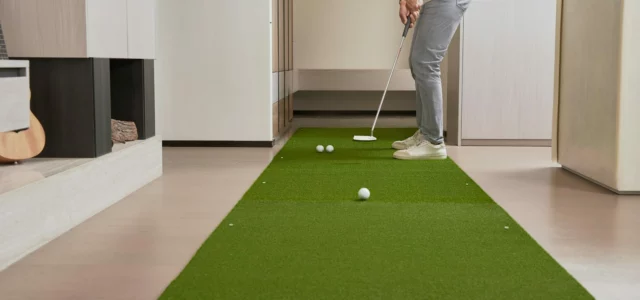
Range and putting work. An all-weather range makes wet months usable. At Moore Park Golf in Sydney, 30 minutes and 60 balls in a Trackman bay cost A$22 in the off-peak band (6am to 10am, Tuesday to Sunday) in September 2026. At home, the lag-putting drills need nothing more than a hallway carpet.
Take the break, then choose one thing
Three or four weeks without golf is not wasted time. Niggles settle, and enthusiasm comes back. If something has hurt all summer, the break is when to see a physiotherapist or doctor about it rather than a coach.
After that, pick one project. Not a list. A grip change, a putting routine, a wedge distance chart, or a winter of strength and mobility work. Give it a start date and a place, whether that is a range bay, a gym or a putting mat. A change started in June has four months to stop feeling strange before spring. The same change started in November costs you the summer. When September comes around, our spring countdown takes over, and a launch monitor session can measure whether the project worked.
Where to get the end-of-season jobs done
- Regrips, reshafts, loft and lie: a retailer’s repair workshop, or your own club’s pro shop, which keeps the money at the course you play.
- Fittings: one retailer charges A$100 for an hour, waived with a purchase, and another offers a free fitting.
- Trade-ins and second-hand clubs: in store at a large golf retailer, or a pre-owned range online.
- Winter competition: your club’s pennant captain, Golf NSW, GolfWA or your state body; Golf Australia’s nine-hole push around the June solstice.
Before the bag goes in the cupboard
- Wash heads, shafts and grips; dry everything properly.
- Store clubs and balls inside the house, never in a hot car boot or a cold shed.
- Total the summer’s stats and write the three-line note.
- Check every score is submitted in the Golf Australia app.
- Book the regrip, trade-in or fitting well before spring.
- Decide whether winter means pennant, nine holes, rest, or one project, and put a date on it.
How this page was put together
Prices and conditions were read in September 2026 on the own pages of Drummond Golf, GolfBox and House of Golf (Australia). Panxis Golf has no commercial relationship with these businesses and earns no commission.