Learning from the pros: what to watch on TV and at the WA Open, PGA and Australian Open
Broadcast golf is edited for drama, so most viewers learn nothing from it. Watch for targets, misses, routines, wedges and short-game club choice instead, and skip the swing replays. Better still, stand by a green at the WA Open, the Australian PGA or the Australian Open this spring and summer.
In brief
- Watch where players aim, not where the flag is: the percentage play is the middle of the green.
- Note which side of the green the misses finish on, and time a player's pre-shot routine.
- Inside 90 metres, count the full swings: there are very few.
- Copy decisions and routines, never a swing from a slow-motion replay.
- WA Open at Secret Harbour 15-18 October with free entry, Australian PGA at The Lakes in November, Australian Open at Kingston Heath 3-6 December.
Plenty of Australian golfers set an alarm for the final round of a major, watch every shot, and walk onto their own course the next Saturday playing exactly the same way. The broadcast is built to show you drama: the approach that stops next to the hole, the long putt that drops, the drive over a bunker. What actually saves professionals shots is mostly edited out. Watch with a few specific questions in mind and those hours start paying you back.
Question one: where did they aim?
Forget where the flag is. When a pin sits a few paces from the edge of a green with sand beside it, count how many players in the field fire at it and how many aim at the fat part of the green and accept a longer putt. The commentary may call it cautious. It is simply the percentage play.
The reason is spread. Even the best iron players do not land every ball in a tight circle, and a club golfer’s pattern is far wider. If a tour player will not chase a tucked flag with their dispersion, a 15-marker in a Saturday Stableford has no business doing it with theirs. On firm, fast Australian greens, the cost of being short-sided is even higher, because the ball will not check up on a recovery chip.
This is the one lesson from television you can use this weekend without a single practice ball.
Question two: which side did they miss on?
The cameras follow shots that finish close. Train yourself to notice where the poor ones go. Good players leave the ball on the side of the green where the next shot is simple: below the hole, on the open side, away from the bunker. That is decided before the swing, when they choose a target.
Listen for the commentator’s word “short-sided” and notice who it happens to. Usually it is the player drifting down the leaderboard, not the one leading it.
Question three: how long was the routine?
Pick one player and count the seconds from stepping into the shot to starting the backswing, five times over a few holes. The number barely changes, even with a tournament on the line.
Club golfers usually do the opposite: they rush when nervous and freeze when unsure. You do not need a professional’s routine, and it does not have to be long. It needs to take the same time on the 1st tee of the club championship as it does on the practice fairway.
Question four: what did they do inside 90 metres?
Drives are the least useful part of a broadcast for learning. Wedge play is the most useful. On a short pitch, look at how short the backswing is and how rarely a full swing appears inside 90 metres. Watch where the ball lands relative to the flag, which is usually short of it, and how far it releases.
That is the shot you face several times every round and rarely practise. The televised version shows the two things that make it work: a shorter swing at steady speed, and a landing spot chosen on purpose. Our wedge numbers guide turns that into a practice plan.
Question five: which club came out just off the green?
From a tight lie with green to work with, count how often the best players use a putter or a low running chip instead of a high lob. The less time the ball spends in the air, the less can go wrong. On Sandbelt-style firm surrounds, that ground game is often the sensible option, and it is the one club golfers most often skip in favour of the 60-degree wedge.
Question six: how did they walk to the next tee?
Watch a player walk off after a double bogey. There is usually no visible difference from the walk after a birdie. It is a habit, not a personality: the hole is finished when they leave the green.
Borrow it. The walk from green to tee is where the last hole ends. Write the score, say nothing more about it, and hit the next tee shot fresh. Plenty of club golfers lose more points on the hole after a disaster than on the disaster itself.
What not to copy
Do not rebuild your swing from a slow-motion replay. Tour players have coaches, physios, a fitting team and years of practice behind that motion, and the speed you are watching is one you cannot produce. Copy the shape without the speed and you get a different swing. Their equipment is also built to their specifications, so part of the flight you admire comes from the club.
Copy decisions, routine, target and short-game club choice. They cost nothing and they transfer straight away.
Where to watch in person in late 2026
A single day on course shows you what television cannot: real ball flight, real green speed, and all the shots the cameras skip. The trick is not to follow one group for 18 holes. Pick a par 3 or a green complex and stay for an hour, watching dozens of players face the same shot and choose different targets.
The Australian calendar for the rest of 2026 gives you several chances:
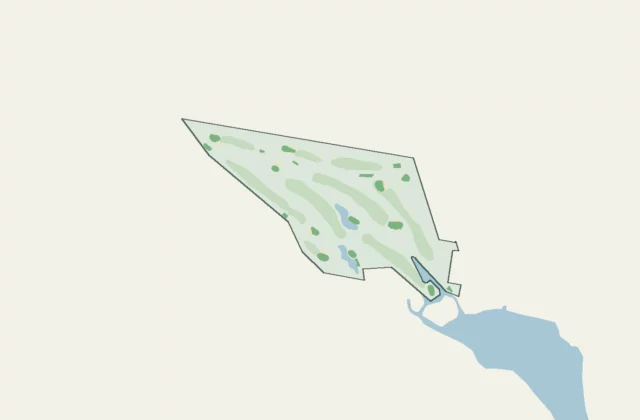
- WA Open, 15 to 18 October at Secret Harbour Golf Links in Western Australia. GolfWA says entry is free for spectators all week, with play starting at 7am on Thursday and Friday and around 9am at the weekend.
- BMW Australian PGA Championship, November at The Lakes Golf Club in Sydney, returning to New South Wales for the first time since 1998. It opens the DP World Tour’s Race to Dubai.
- Crown Australian Open, 3 to 6 December at Kingston Heath on the Melbourne Sandbelt, the week after the PGA. When it confirmed the dates in November 2025, Golf Australia said fans would again see Rory McIlroy there, and at the 2025 edition the weekend general admission tickets sold out, so plan early. Public tickets were announced for sale through Ticketek. Our Australian Open spectator guide covers the practical side.
Earlier in the year, the Women’s Australian Open was played at Kooyonga in Adelaide in March 2026, with practice days on Monday and Tuesday and the pro-am on Wednesday before four tournament rounds. Practice days at events like this are the best learning days of all: smaller crowds, players hitting extra balls, and time to stand behind the range and watch wedge distances being dialled in.
Closer to home, state and club finals are often played on excellent courses with almost no crowd. A pennant final or a state amateur event lets you watch low-handicap amateurs manage a course without television editing a thing. Check your state association’s calendar and whether spectators are welcome on the day.
If you want to be inside the ropes rather than behind them, volunteering at a tournament is the closest view in golf.
Panxis Golf has no commercial relationship with any tournament, venue, broadcaster or ticketing company named here.
On the couch: making broadcast golf useful
Australian viewers often watch the big overseas events live overnight or early in the morning, which is not ideal for concentration. Recorded or on-demand coverage is actually better for learning, because you can pause before each approach, guess the target, then see what the player chose. Where a broadcaster offers featured-group coverage following one pairing shot by shot, choose that over the main feed: it includes the lay-ups and the boring pars, which is exactly the material you need.
Six things to try on your next viewing
- Pick one player and time five pre-shot routines. Write down the spread.
- On the toughest pin of the day, count how many players aim straight at it.
- Note which side of the green each missed approach finishes on.
- Count full wedge swings inside 90 metres. There will be fewer than you expect.
- From just off the green, count putters and bump-and-runs against lob wedges.
- Watch the walk after a bogey, then copy it next Saturday.
Watching golf will not fix your swing. Watched with these questions, it will fix a lot of decisions, and decisions are worth more Stableford points than a swing change made from a replay.