The nine-hole bag: which six to eight clubs to carry after work, and a light bag to hold them
Six to eight clubs, one strap, nine holes before dark. How to build a half set around your game, what goes in the pockets, and what golfers say about the Ping Moonlite Sunday bag.
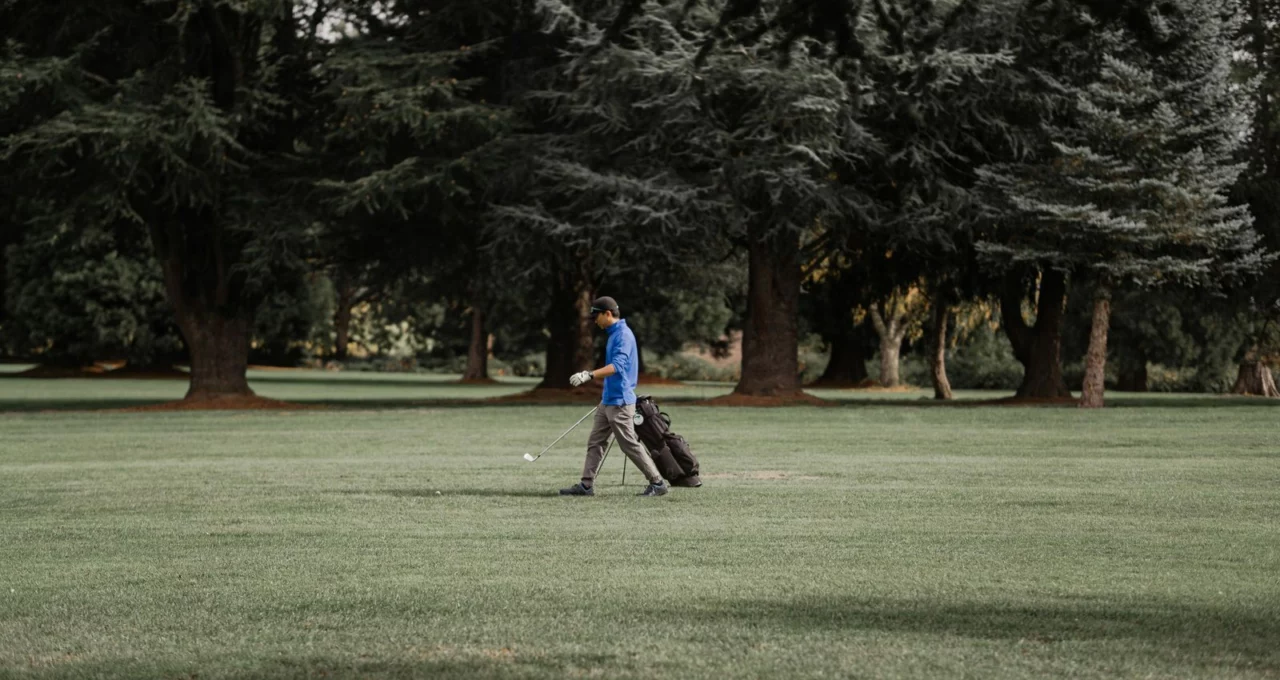
It is 4:45 on a Tuesday, the tee sheet shows a twilight slot, and fourteen clubs in a full stand bag feel like a lot of decisions for nine holes. This is the moment for the half set: six to eight clubs in a light bag that sits on one shoulder, enough to play every shot the course asks for, and few enough that you stop thinking about equipment and simply play. Here is which clubs to keep, how to build the set around your game, what goes in the pockets, and what golfers say about one well-known Sunday bag.
We use the Ping Moonlite as a worked example because it is sold in every one of our markets and because Ping publishes its specifications. The specifications come from Ping, the price was read at an American retailer in October 2026, and nobody here has carried this bag on a course. This is a buying guide and a reading of public opinion, not a test.
Why a half set works better than you think
The Rules of Golf set a maximum, not a minimum. Rule 4.1b limits you to fourteen clubs, and nothing in the rules asks you to carry more than one. You can play a round with a putter and a seven-iron if you like, and your score still counts. Under the World Handicap System, a nine-hole score can also be posted to your Handicap Index, so the evening round is not a lesser round.
Most amateurs hit a handful of clubs most of the time: one off the tee, two or three for approaches, a wedge, a putter. The rest is insurance. Take it away and you walk faster, decide faster, and learn to hit shots between clubs, a skill that helps with the full set too.
A Sunday bag (also called a pencil bag) has no legs, no heavy base and only a few pockets. It is built for one shoulder and a short round, and it slips behind a car seat. Our guide to choosing a golf bag covers the whole range of bags; here we stay with the small one and what you put in it.
The core: four clubs nearly everyone keeps
Whatever your game, four slots are almost always filled.
- The putter. You will use it on every hole, more than any other club.
- A sand or lob wedge. Around 54 to 58 degrees. It covers bunkers, short pitches over a bunker and any chip that needs to stop quickly. If you only carry one wedge, carry this one.
- A mid-iron, usually the seven. The most versatile club in the set. It can be a full approach shot, a three-quarter punch under the wind, or a bump and run from just off the green.
- A club for the tee. On a nine-hole evening round this does not have to be the driver. A hybrid, a fairway wood or a long iron you trust is often a better choice on a short, tight course.
With those four you can play any hole. Everything else closes the biggest distance gaps.
Building the rest of the set around your game
The usual rule of thumb is every other club: with a seven-iron, leave the six and the eight and take the five and the nine. Your gaps grow from roughly 10 to 15 yards to 20 to 30, and those gaps are where the interesting shots happen. Then adjust to the way you play.
If you hit the ball a long way
Take the driver if the course has a couple of open par 4s. Your approaches will be shorter, so the bottom of the set matters more. A typical seven-club set: driver, hybrid, seven-iron, nine-iron, pitching wedge, sand wedge, putter.
If your short game is your strength
Drop one long club and add a wedge. A pitching wedge and a 56 degree cover the 50 to 100 yard zone without too many awkward half swings. Our guide to wedge distances with three swing lengths explains how to turn two wedges into six reliable yardages.
If you are newer to the game
Fewer clubs is a gift. A hybrid, a seven-iron, a nine-iron or pitching wedge, a sand wedge and a putter: five clubs, none of them as hard to hit as a long iron, and no club in the bag you are afraid of.
Let the course decide the last slot
Look at the scorecard before you pack. The par 3s tell you which irons you need, a long par 5 earns a fairway wood, and a short executive course may not need anything longer than a hybrid. Our page on nine-hole and short courses describes the formats you are likely to meet.
Shots between clubs: what the half set teaches you
Sooner or later you will stand 135 yards out with a nine-iron that goes 125 and a seven-iron that goes 150. That is the point.
- Grip down. An inch or two lower on the grip takes a few yards off without changing the swing.
- Shorten the swing. A three-quarter swing with the longer club usually flies lower and straighter than a forced full swing with the shorter one.
- Play the ground. On a firm fairway, a low shot that lands short and runs on is often safest, and a mid-iron does it better than a wedge.
- Choose the miss. When the distance sits between two clubs, take the one that leaves you on the safe side of the hole: short if the trouble is long, long if the bunker guards the front.
The full set lets you avoid these shots, yet they are the ones that save strokes in the wind or from a poor lie.
The pockets: what goes in, what stays in the car
A Sunday bag has little room by design, which forces a useful question: what do you really use in nine holes?
Take:
- Four or five balls, a few tees, a ball marker, a divot repair tool and one glove.
- Phone, keys and wallet in the pocket that zips shut.
- A bottle of water. Our guide to food and water on the back nine explains why.
- A rangefinder if you use one, and a light layer.
Leave in the car:
- The umbrella and rain suit: if the forecast is that bad, the evening nine can wait.
- Spare gloves, spare balls, iron covers and anything that lives in the bag “just in case”. Keep one headcover for a driver or wood.
Carrying it well
One strap puts the whole load on one shoulder, so switch sides every few holes. Wear the bag high, behind the hip rather than against the back of the knee. With no legs, it lies on the ground at each shot: keep it out of wet rough and on the side of the green nearest the next tee. If you have a back or shoulder concern, ask a health professional before carrying, even a light bag.
The example: what Ping publishes about the Moonlite
The Moonlite is a long-running Sunday bag; its current version, introduced for 2025, is smaller than earlier ones. According to Ping’s product page:
- Weight. 2 lbs.
- Capacity. Designed for 7 to 9 clubs, which Ping presents as the right set for a par-3 course or a practice session.
- Top. A two-way top, so two compartments for the clubs.
- Pockets. Three in all, with a total pocket volume of 7 liters: an insulated water-bottle pocket (which Ping notes is not waterproof), a rangefinder pocket and an accessory pocket.
- Strap. A single standing strap, designed to sit upright so you can pick the bag up without bending all the way to the ground.
- Other details. A Velcro glove patch and a water-resistant belly.
- Colors. Three colorways at the time of writing.
Ping does not list a fabric or dimensions on the page, so we do not give any. Price read in October 2026 at an American retailer: $110.
A bag sized for seven to nine clubs suits the half set exactly; it is not one to load with a full set.
What golfers are saying about the Ping Moonlite
In golf forums, published reviews and public retailer comments, the same points come back about the current version.
What they like:
- The weight. Owners and reviewers describe a bag they barely notice on the shoulder, and published round-ups of Sunday bags single it out for its weight.
- The standing strap. Being able to grab the bag at waist height instead of bending to the ground is mentioned again and again, and it matters more than it sounds over nine or eighteen pickups.
- How small it stores. Because the bag has no frame or legs, it folds down and lives behind a car seat or in a closet, which many owners say is exactly why they bought it. The quiet ride also gets mentioned: with the clubs close together, they rattle less as you walk.
What they criticize:
- The smaller capacity compared with older Moonlites. Long-time owners point out that earlier versions with a four-way top could take a full set, while this one is built for seven to nine clubs, and that the opening gets crowded near the top of that range.
- No legs and no structure. Laid on the ground, the clubheads rest on the grass, which means wet headcovers on a dewy evening and scuffs on a hard surface such as a parking lot.
- Clubs sliding out. With nothing heavy at the bottom of the bag, some owners say clubs can slip out when it is tipped or carried at an angle.
- Small pockets. A few balls, tees, a phone, keys and a bottle fill them, so anyone who likes to carry a jacket and snacks will run out of room.
Where to find a light bag and an evening nine in the United States
Your course’s pro shop often stocks a couple of Sunday bags; load your own clubs into one and see whether seven or eight fit without crowding the top.
Big golf stores carry several brands side by side, the quickest way to compare weight, strap padding and pockets. Bring your longest club along.
Online and used are cheaper. A Sunday bag has little to wear out apart from zips and strap, so check those and the bottom for holes, and confirm the model year, since older and newer bags of the same name can differ in capacity.
For the round itself, many public and municipal courses in the United States offer twilight rates on later tee times and sell nine holes. Start times and prices vary by course and season, so check the tee sheet. Ask whether walking is allowed at that hour, and check sunset before you book the last slot.
Whichever route you take, ask about the return policy and the warranty on zips and straps. There is no commercial link on this page and no commission.
A short checklist for the evening nine
- Putter, a sand or lob wedge, a seven-iron and one club you trust off the tee: that is the core.
- Add two or three clubs, every other iron, and let the par 3s pick the last one.
- Practice the in-between shot: grip down, shorten the swing, let the ball run.
- Check twilight times, walking rules and sunset before you book.
Seven clubs and a bag that weighs a couple of pounds will not change your handicap overnight, but they will get you onto the first tee more often after work, and that is where every improvement starts.
How this page was put together
This is a buying guide and a reading of public opinion, not a test. The weight, capacity, top, pockets, pocket volume, strap and other details of the Ping Moonlite come from the product page Ping publishes for the current model; where Ping gives no figure, such as fabric or dimensions, we give none. The price of $110 was read in October 2026 on the website of PGA TOUR Superstore, an American golf retailer; it matches the list price Ping shows for the United States. What golfers say was read on the GolfWRX forum, in the Sunday bag buyer’s guide and review published by MyGolfSpy, and in public retailer reviews; nobody is quoted by name, nothing is counted, and an impression is never presented as a statistic. The rules points come from the Rules of Golf (Rule 4.1b) and the World Handicap System as applied by the USGA.
Nobody here has carried this bag or played these clubs for this page. There is no commercial link on this page, no affiliate arrangement and no commission of any kind. If a piece of content on this site is ever paid for by a brand, it will carry an advertising notice at the top of the page, before the first line.