Food, water and the back nine slump
Fatigue reaches your decisions before it reaches your swing, which is why the card falls apart at fifteen while the ball striking still feels fine. Small and often beats one large stop at the turn.
In brief
- Total holes 13 to 18 on your last ten cards: the pattern is usually obvious.
- Start drinking on the first tee; thirst arrives after performance drops.
- Eat something small every five or six holes rather than one meal at the turn.
- A second coffee at the turn on no food is where the three-putts come from.
- In real heat, play early and treat headache or dizziness as a reason to stop.
A round of golf is four hours of low-intensity work with a handful of high-effort moments, usually in the sun. Nobody collapses at the twelfth, but plenty of golfers make worse decisions there than they did at the second, and most of the reason is that they have eaten nothing and drunk two cups of coffee.
This is ordinary practical advice for a healthy adult playing recreational golf, not medical guidance, and the warning at the end of the article is the important part of it.
The back nine is where it shows
Concentration fades before the swing does. The pattern is familiar to anybody who keeps a card: a solid front nine, a couple of loose tee shots around the turn, then a three-putt and a wrong club at fifteen.
The order matters because it explains what to fix. Fatigue affects decision-making earlier and more severely than it affects ball striking, which is why the scorecard usually deteriorates before the swing feels any different. You do not notice getting worse; you notice the score.
There is an easy way to test this on yourself. Take your last ten cards and total holes one to six, seven to twelve, and thirteen to eighteen separately. If the last block is consistently a stroke or two worse than the first, the problem is more likely to be the back of the bag than the back of the swing.
Drink before you are thirsty
Thirst arrives after the point at which performance starts to drop, which makes it a poor signal to organize around. Take more water than you think you need and start drinking on the first tee rather than at the tenth.
A reasonable working figure for a warm round is a pint an hour, more in genuine heat, and the practical version is a bottle you refill at the turn rather than a cup bought at the halfway house. In summer, adding something with electrolytes for the second nine helps, because on a hot day you are losing salt as well as water and replacing only the water can leave you feeling worse rather than better.
In cool weather you still lose fluid, just less noticeably, and cold-weather golfers routinely drink almost nothing across eighteen holes. In dry climates, and at elevation in the mountain West, the loss is larger than it feels because sweat evaporates before you notice it.
Alcohol on the course is a personal choice and this is not a lecture. It is worth knowing that it is a diuretic, that one beer at the turn on a hot day is doing the opposite of what a golfer needs, and that most people’s putting stroke is not improved by it.
Eat small and often, not once at the turn
A large meal at the halfway house is the standard American approach and it produces the standard slump on holes eleven and twelve. A hot dog and a soda is a spike followed by a crash, arriving exactly where the round is decided.
Something small every five or six holes works considerably better: a banana, a handful of nuts, a cereal bar, half a sandwich. The aim is a steady supply rather than a peak and a trough, and the quantities involved are modest. This is not fuelling a marathon.
Timing beats content for most golfers. Eating something at the fifth, the tenth and the fourteenth, whatever it is, will do more than optimizing what is in the bag.
What to put in the bag
- Water, more than you think, plus an electrolyte drink or tablets in summer.
- Two pieces of fruit and a small bag of nuts or trail mix.
- One cereal bar or half a sandwich for the turn, eaten across two holes rather than in one sitting.
- Sunscreen, a hat and a towel. Heat costs more shots than hunger does.
- In cold weather, something warm to drink and a pair of dry gloves.
Caffeine helps and then it does not
Coffee before a round is fine and mildly useful: caffeine genuinely improves alertness and perceived effort, which is worth something over four hours.
The problem is the second cup at the turn on top of no food. That is where the jitters and the three-putts come from, and where a mild diuretic effect meets a golfer who has not drunk any water. If you rely on caffeine, pair it with something to eat and with more water than you would otherwise take.
Heat, and the American version of the problem
Summer golf in the South and the Southwest is a different proposition from summer golf anywhere else, and it is the situation where the advice above stops being about scoring and starts being about safety.
The practical measures are the obvious ones done properly: play early, take shade wherever the walk offers it, wear light colors and a wide-brimmed hat, use a cart towel soaked in ice water, and drink to a schedule rather than to thirst. Courses in Phoenix and Las Vegas run summer tee sheets that start before dawn for exactly this reason.
Know the warning signs and treat them as a reason to stop: a headache, dizziness, confusion, nausea, or having stopped sweating in heat. That is not a golf problem and there is no score worth finishing.
Walking, riding and the difference it makes
Walking eighteen holes covers roughly five miles, and carrying a bag while doing it burns real energy. That makes the eating and drinking plan more important rather than less, and it is the reason walkers feel the last four holes.
Riding reduces the physical load but not the heat exposure, and golfers in carts routinely drink less, because they are not aware of the effort and the cooler is behind them rather than on their back. If you ride in summer, the schedule matters more, not less.
Pushing a trolley is the middle option and, for most people, the best one: the exercise of the walk without the load on one shoulder.
Where to stock up in the U.S.
The halfway house and the cart girl are the expensive and least useful option, and they are also the reason most golfers eat one large thing at the turn rather than five small ones. Buying what you need before you arrive costs a fraction and lets you eat on your own schedule.
Practically, that means a supermarket stop on the way: fruit, nuts, and whatever bar you will actually eat. Electrolyte tablets and powders are sold at any pharmacy and most sporting goods retailers, and they take up no room in a bag.
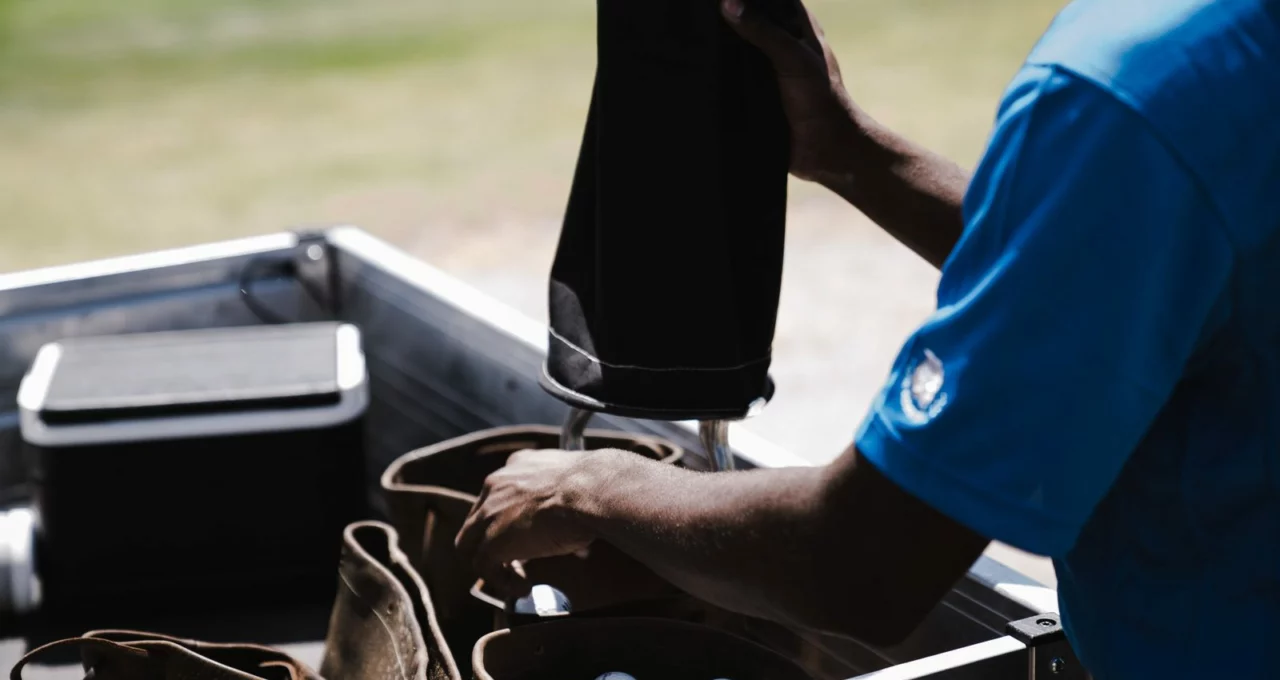
For the cooler itself, most golf retailers sell insulated bag coolers that fit a golf bag pocket, which matters more than it sounds: a bottle that has been in the sun for two hours is a bottle nobody drinks. Check your club’s policy on outside food and drink before loading up, since it varies and some courses enforce it.
The general warning
This is practical advice for a healthy adult playing recreational golf, not medical guidance. If you manage a condition affected by heat, fluid balance or blood sugar, or you take medication that changes how your body handles any of them, ask your doctor what to carry and what to watch for. That conversation takes ten minutes and is worth more than any article on the subject.
What to try next round
- Start drinking on the first tee, not at the turn.
- Eat something small every five or six holes instead of one large stop.
- Total holes thirteen to eighteen on your last ten cards, then do it again after a month of this.
- In summer, add electrolytes for the second nine and play the earliest tee time you can get.
It is the cheapest change available in golf: no equipment, no lesson, and it shows up exactly where most amateur rounds fall apart.
Where this shows up on a course
Three courses from our directory that ask something of your legs.
- Erin Hills: Hurdzan, Fry and Whitten on glacial ground north-west of Milwaukee, host of the 2017 U.S. Open: what it asks of you, and what players praise and criticize.
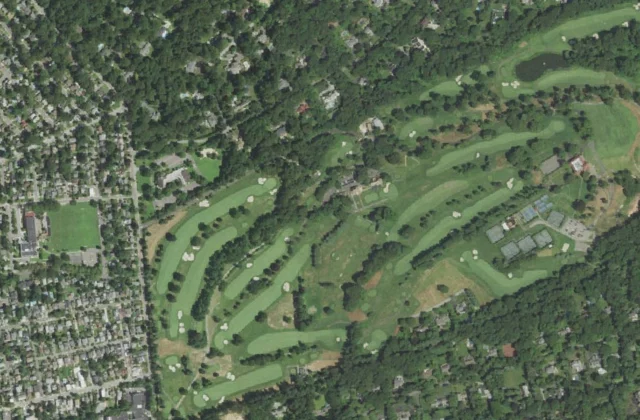
- Brae Burn Country Club: Early Ross on rocky New England hills west of Boston, host of the 1919 U.S. Open: an admired routing, a weak set of par fives, and what guests actually report.
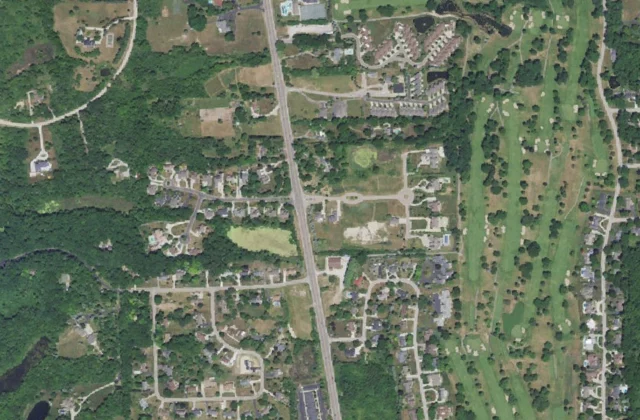
- Linden Hall: A 1959 course on a 785-acre estate in the Laurel Highlands, once a steelworkers’ union retreat: par 72, no two fairways parallel, and hills that make the card irrelevant.
We have not played these courses; each page says what it is based on.
How this page was put together
Product availability mentioned in this article (electrolyte products and insulated bag coolers) was checked at Dick’s Sporting Goods, PGA TOUR Superstore and Golf Galaxy in the United States. Panxis Golf has no commercial relationship with these retailers and earns no commission.