Nine holes before dark: half a set and a light bag for Canada’s October twilight rounds
Six to eight clubs, one strap and a toque in the pocket: how to build a half set from the scorecard for October twilight nines in Canada, what Ping publishes about the Moonlite Sunday bag and what owners say about it.
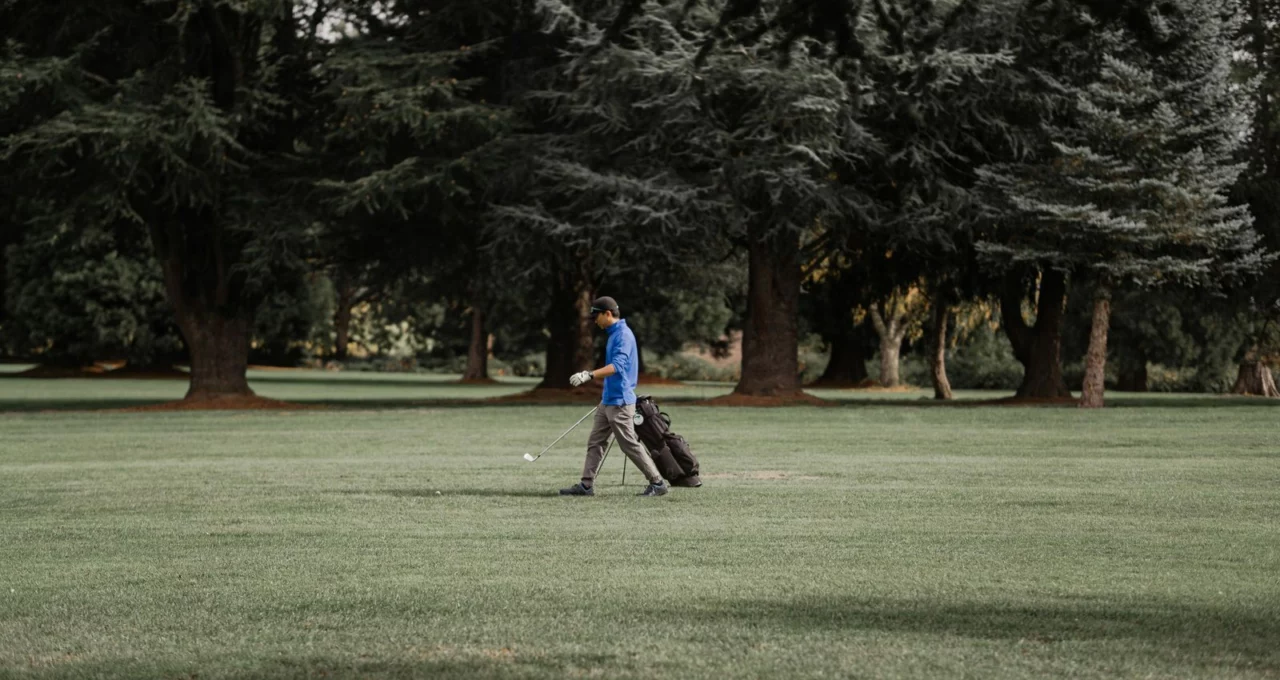
Early October changes the arithmetic of after-work golf in Canada. The light goes sooner every evening, the last holes are played closer to 8 degrees than 20, and a full eighteen after the office is out of reach. Nine holes still fit, if you get off the first tee quickly. That is the case for a half set: six to eight clubs in a bag light enough to forget about, chosen so that every shot on your course still has an answer. Here is how to pick them from the scorecard, what to pack for the cold, and what owners say about one light bag.
The Moonlite is our example because Canadian stores stock it and Ping documents its current version clearly. Its specifications come from Ping, its price was read in October 2026 at a Canadian online store, and nobody on the Canada desk has carried it on a course. Read this page as a buying guide and a summary of public opinion, not as a product review.
Fourteen is a ceiling, not a target
Rule 4.1b of the Rules of Golf caps the bag at fourteen clubs. It sets no minimum. You can play a perfectly legal round with five clubs, or with three, and the score is just as valid as one played with a full set.
Most club golfers lean on a handful of clubs anyway: something for the tee, one or two irons into the greens, a wedge, a putter. Leave the rest in the car for one evening and you walk faster, decide faster, and are forced to learn the in-between shots that a full set lets you dodge, the ones that save a bogey in a fall wind.
Read the scorecard before you pack
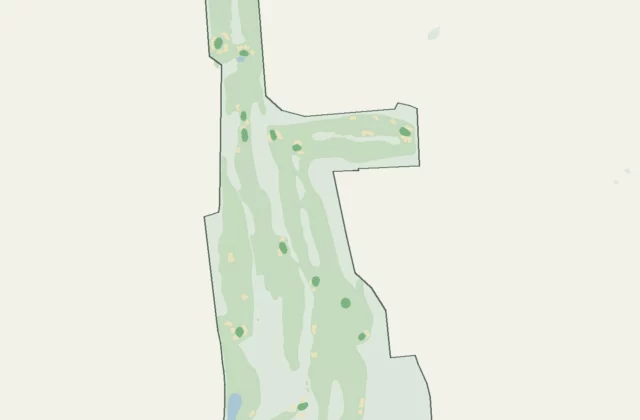
The quickest way to build a half set is to start from the nine holes you are about to play, not from the clubs you own. Sit in the car for two minutes with the card, or pull up the course layout on your phone, and answer three questions.
- How long are the par 3s? They are the only holes where you must hit a specific distance from the tee. If the front nine has par 3s of 145 and 175 yards, you need clubs for both of those numbers, and everything else can be built around them.
- Is there a par 5, and can you reach it in two? If not, the second shot is a positioning shot, and a hybrid or a seven-iron does it as well as a three-wood.
- How tight are the tee shots? Narrow par 4s lined with spruce or maple reward a club you keep in play, which on many evenings means leaving the driver at home and teeing off with a hybrid or fairway wood.
A par-3 or executive layout might need nothing longer than a hybrid; a full-length nine with two par 5s earns a fairway wood. Our guide to building your fourteen explains how to map your carry distances; the same chart tells you which clubs to drop for the half set.
The four clubs that rarely come out
Whatever the course, four slots tend to stay filled.
- Your putter. It takes more strokes than any other club on a nine-hole card. Never leave it behind to save weight.
- One higher-lofted wedge, around 54 to 58 degrees. It handles greenside sand, the short pitch over a bunker and the chip that has to stop. If you take only one wedge, this is the one, because the pitching wedge’s job can be covered by a soft nine-iron, while nothing else in the half set gets out of a bunker.
- A seven-iron, or whichever mid-iron you trust most. It is the Swiss army knife of the set: a full approach, a punch under a headwind, a chip-and-run from the fringe when the grass around the green is too wet and fluffy to nip a wedge from.
- A dependable tee club. Not necessarily the driver. On a short or tree-lined nine, a hybrid or a five-wood you can hit straight is often worth more than an extra 20 yards.
Those four play every hole. The remaining two to four slots close the biggest yardage gaps.
Three half sets, built for three golfers
The common shortcut is to take alternate irons: the five, seven and nine, leaving the six and eight at home. That turns gaps of about 10 to 15 yards into gaps of 20 to 30. It is a good start; then shape it around the way you actually score.
The golfer who can hit it a long way
Bring the driver if the nine has one or two open par 4s where length pays. Because your approaches are shorter, the lower end of the set matters more than the top. Seven clubs might look like this: driver, four-hybrid, seven-iron, nine-iron, pitching wedge, 56-degree wedge, putter.
The golfer whose short game does the scoring
Keep only one long club and spend the saved slot on a second wedge. A pitching wedge plus a 56 degree covers the 40 to 110 yard zone, where most of your strokes are won or lost. Practising three swing lengths with each of them, as our guide to building your wedge card shows, turns two clubs into six yardages. A set of six works well: hybrid, six-iron, eight-iron, pitching wedge, 56 degree, putter.
The golfer in a first or second season
Fewer clubs are a relief, not a handicap. Five do the job: a hybrid in place of any long iron, a seven-iron, a nine-iron, a sand wedge and a putter. Nothing in that bag is hard to hit.
Playing the yardage you do not have
The half set will sooner or later leave you 140 yards from the flag holding a nine-iron that flies 130 and a seven-iron that flies 155. That moment is the whole point of the exercise, and four tools handle it.
- Choke down. Hold the longer club an inch or two lower. You lose a few yards without touching the swing.
- Take some speed off. A three-quarter backswing with the seven-iron produces a lower, more controlled ball than a lunge with the nine. In a cold October breeze, the lower flight also holds its line better.
- Use the ground. When the green is open in front, land the ball short and let it release. A mid-iron does that more reliably than a wedge, which tends to check up, especially on soft fall turf.
- Pick the safe miss. If water or a bunker guards one side of the target, choose the club that leaves the ball on the other side. Long behind a pin tucked over a front bunker; short of a green that falls away at the back.
Packing for a cold October evening
A Sunday bag has deliberately small pockets, so the question is not what you might need, but what you will actually use between now and dark. In a Canadian fall, the answer leans toward warmth.
Worth the space:
- Four balls, a handful of tees, a marker, a pitch-mark repair tool and one glove. Leaves on the fairway swallow more balls in October than in July, so do not go below four.
- A toque and a pair of thin winter gloves for between shots. The temperature can drop several degrees over the last three holes once the sun goes behind the trees.
- Phone, keys and wallet in the pocket that zips, and a small towel, because the grass is wet with dew well before sunset.
- A water bottle. Cold air hides thirst, a point our guide to food and water on the course makes for both ends of the season.
Leave in the trunk:
- The umbrella and full rain suit. If the forecast is that wet, nine holes in the cold rain are not the evening anyone needs.
- Spare sleeves of balls, iron covers, a second glove and the collection of tees and pencils that live at the bottom of every big bag. One headcover for the driver or wood is enough.
A word about carrying. A single strap loads one shoulder, so switch sides every couple of holes, wear the bag high behind the hip and keep it off the back of the knee. Because a Sunday bag has no legs, it goes on the ground at every shot: put it down on the walk-off side of the green and away from the soaking-wet rough. If your back or shoulder has been giving you trouble, check with a health professional before carrying any bag, light or not.
The Ping Moonlite, by the numbers Ping publishes
The Moonlite name has been around for years, and the bag has changed. The version Ping launched for 2025 is smaller than the earlier ones. Ping’s Canadian product page lists:
- Weight: 2 lbs, or roughly 0.9 kg.
- Capacity: 7 to 9 clubs, which Ping pitches at par-3 courses and practice sessions.
- Top: a 2-way top, meaning two compartments for the clubs.
- Pockets: three, with 7 litres of total pocket volume, including an insulated water-bottle pocket (Ping notes it is not waterproof) and a rangefinder pocket.
- Strap: a single strap.
- Other details: a Velcro glove patch, a compact design and a water-resistant belly.
- Colours: three were listed when we checked, Heather Grey/Black, BlackOut and Blue Isles, with only the first shown in stock.
Ping does not publish the fabric or the dimensions, so we do not either. Price read in October 2026 at a Canadian online store: C$170.00, before GST or HST and any provincial sales tax.
One caution: a bag sold as “Moonlite” on clearance or resale may be the older, larger model with a different top, so check the year and the number of dividers. And seven to nine clubs is the design brief, not a suggestion.
What golfers are saying about the Ping Moonlite
Across golf forums, published reviews and public retailer comments about the current version, the same themes come up again and again.
Praise that keeps returning:
- How little it weighs. Reviewers and owners describe a bag that barely registers on the shoulder, and published round-ups of Sunday bags pick it out for its value as much as its weight.
- Storage. With no frame and no legs, it collapses into a small space, so it lives behind the seat of the car, in a locker or in a hall closet.
- Quiet walking. Because the clubs sit close together in a narrow opening, owners report far less rattle than with a bigger carry bag.
Complaints that keep returning:
- A tight opening. Several owners find that the top becomes crowded once the bag holds eight or nine clubs, and that pulling one club out drags another with it.
- Clubs sliding out. With nothing rigid at the base, some say clubs slip out when the bag is tipped or carried at an angle, for example when it is slung over the shoulder in a hurry.
- Clubheads on the ground. Lying flat, the bag rests the heads on the turf, which means wet headcovers on a dewy evening and scuffs on gravel or asphalt.
- Small pockets. Balls, tees, a phone, keys and a bottle fill them. On a cold evening, a toque and gloves leave little room for anything else, and a jacket will not fit.
- Reduced capacity. Long-time Moonlite owners point out that earlier versions could take a full set, and some regret the change.
Where nine holes after work still fit in a Canadian October
The calendar. In much of the country, October is the last real month of the season. Courses in Ontario, Quebec, the Prairies and Atlantic Canada typically begin closing from mid-October into early November, depending on weather and on the course, while parts of coastal British Columbia keep playing through the winter. Thanksgiving falls on Monday, October 12 this year, and for many golfers that long weekend is the last busy one on the tee sheet. Clocks fall back on Sunday, November 1, which takes an hour of evening light away in one go. Before then, sunset in Toronto moves from a little before 7 pm at the start of the month to around 6:15 pm by Halloween; out west and up north the times differ, so check your own city before you book.
The formats to look for. Many public, municipal and semi-private courses sell a nine-hole rate, a twilight rate after a set time, or both. The start time for twilight usually moves earlier as the days shorten, so the rate posted in July may no longer be the one that applies. Par-3 and executive courses, often run by cities or attached to driving ranges, are an even better fit for a half set: our guide to nine-hole and short courses in Canada describes what you can expect from each. Rates and closing dates differ from course to course, so we do not quote any here: check the tee sheet or call the pro shop.
The handicap. Golf Canada, which runs the World Handicap System in Canada with the provincial associations such as Golf Ontario, Golf Québec, BC Golf and Alberta Golf, accepts nine-hole scores. When you post one, the system converts it to an 18-hole score using an expected score for the other nine based on your Handicap Index. So the evening nine counts, as long as you play by the Rules and post it the same day through the Golf Canada app or Score Centre.
Fall rules that matter at dusk. Fallen leaves are loose impediments, so you may remove them from around your ball without penalty, taking care not to move the ball (Rule 15.1). A ball lost under a pile of leaves is still a lost ball, though, so if you think a shot may have found a leafy area, play a provisional before walking forward. Many courses also put preferred lies in place on wet fall fairways; that is a committee decision, so read the notice on the first tee rather than assuming it applies.
Getting out on time. Ask at the desk whether walking is permitted late in the day and when the last group must be in, and leave enough margin to finish the ninth with daylight to spare.
Over the winter. A light bag does not go into hibernation with your full set. It is the easiest way to take a handful of clubs to a heated range, a dome or an indoor simulator between November and April. Our guide to closing out the season explains how to store the rest of your clubs properly.
Buying a light bag. Your course’s pro shop often keeps one or two Sunday bags in stock: ask to load your own six or seven clubs into it to see how the top copes. A specialty golf store lets you compare several brands for weight, strap padding and pocket size side by side; bring your longest club. Online, read the return policy before you pay and check whether a return earns a refund or store credit. Used bags are cheap and wear little, but look at the zips, the strap and the base for holes, and confirm the model year, since an older Moonlite is a different bag from the current one. Our general guide to choosing a golf bag in Canada covers the larger options. Whichever route you take, ask what the warranty covers on zips and straps. There is no commercial link on this page and no commission.
Before you head out tonight
- Check the scorecard: the par 3s decide which irons go in.
- Start from putter, sand wedge, seven-iron and a tee club you trust, then add two to four clubs.
- Pack a toque, thin gloves and a towel; leave the umbrella and spare sleeves in the trunk.
- Check sunset, the twilight start time and the walking policy before you book.
- Read the first-tee notice for preferred lies, and play a provisional near the leaves.
- Post the nine-hole score the same evening.
A half set will not lower your Index on its own. What it does is get you to the first tee on a Tuesday in October when you would otherwise have stayed home, and those last few evenings are what you will be thinking about in February in front of a simulator screen.
How this page was put together
This page is a buying guide and a summary of public opinion, not a test. The weight, capacity, top, pockets, pocket volume, strap, colours and other details of the Ping Moonlite come from Ping’s Canadian product page for the current model; the kilogram equivalent is our conversion of Ping’s figure in pounds, and where Ping gives no figure, such as fabric or dimensions, we give none. The price of C$170.00 was read on October 4, 2026, on ca.ping.com, Ping’s own Canadian online store, and is shown before sales tax; the pages of the Canadian retailers we tried first could not be read that day, so we used the manufacturer’s Canadian store instead. What golfers say was read on the GolfWRX forum, in the review and the 2025 bag round-up published by MyGolfSpy, and in public retailer reviews; nobody is named, nothing is counted, and an impression is never presented as a statistic. The rules points come from the Rules of Golf (Rules 4.1b and 15.1) and the World Handicap System as administered by Golf Canada.
No one on the Canada desk has carried this bag or played these clubs for this page. There is no commercial link on this page, no affiliate arrangement and no commission of any kind. If a piece of content on this site is ever paid for by a brand, it will carry an advertising notice at the top of the page, before the first line.