Taking someone golfing for the first time: an Australian game plan
Golf Australia's research found that 93 per cent of Get Into Golf participants kept playing. The first outing you organise for a friend decides which side of that number they end up on, and almost nothing about it depends on their swing.
In brief
- From 4 October 2026 daylight saving gives southern states enough light for nine holes after work.
- Pick a par-3 or council nine-hole course such as Cammeray, Studley Greens or Oakleigh, not your home 18.
- Play ambrose as a team, or Stableford with permission to pick up.
- Explain grip, where to stand and what fore means, then stop coaching.
- The next step is a Get Into Golf group program with a PGA professional, typically five one-hour sessions.
Golf Australia has numbers on what happens to beginners who get a good start. Research on its Get Into Golf program, released in March 2026 and led by Dr Brad Stenner of the University of South Australia, found that 93 per cent of participants kept playing afterwards. That is the benchmark worth keeping in mind before you invite a mate, a partner or a workmate for their first hit: the game keeps people who enjoy their first few outings, and it loses people who spend them embarrassed.
If you are the one taking them, you control most of what decides which way it goes. Not their swing. The venue, the hour, the format and what comes out of your mouth.
Spring is the best time to do this
September is a good month to start somebody. The mornings are cool, the courses in the southern states are coming out of winter, and the long evenings are close. Daylight saving starts on Sunday 4 October 2026 in New South Wales, Victoria, South Australia, Tasmania and the ACT, and from that weekend there is enough light after work for nine holes on a weekday. Queensland, Western Australia and the Northern Territory do not change their clocks, so up there the after-work window stays short and an early Saturday start works better.
The weekday twilight slot matters for a simple reason. What frightens a new golfer most is not missing the ball, it is a group standing on the tee behind them. A Tuesday evening in October, with the sheet thinning out, takes that fear away before you have hit a shot. Book the last tee times of the day and nobody will be waiting.
Summer changes the calculation. From December the afternoons are hot in most of the country, and a beginner who is already tense will not enjoy 33 degrees on an exposed fairway. Go early in the morning instead, bring more water than you think, and put sunscreen and a hat on them before you leave the car park.
Where to take a first-timer in Australia
Your home course is the wrong answer, especially if it is a full-length 18 on a Saturday. Pick a short public layout, a par-3 course or a nine-hole course, where a new player can reach the green from the tee on some holes and finish a round in about an hour.
The capital cities have good options. In Sydney, Cammeray Golf Club in Cremorne runs a public nine-hole par-3 course that describes itself as perfect for beginners, hires clubs when you book the tee time and has a bar open every day, which is a gentler setting than a members’ clubhouse. In Melbourne, Studley Greens, the par-27 course at 121 Studley Park Road in Kew that used to be called Studley Park Golf Course, has nine par 3s in Yarra Bend Park, near the Studley Park Boathouse. Parks Victoria describes it as surrounded by native bush and perfect for beginners.
Council-run nine-hole courses are the other obvious choice. At Oakleigh Golf Course in Melbourne’s south-east, which the City of Monash decided in February 2024 to keep as a public nine-hole course, the 2026/27 fee table lists A$23.20 for nine holes on a weekday, A$27.80 on weekends and public holidays, and A$30.85 for club hire. Prices at every council course move each financial year, so check the course website the week you book.
Whichever course you pick, look for three things: club hire at the counter, a practice putting green near the first tee, and no dress code that will make your guest feel underdressed. Most municipal courses in Australia tick all three.
Make it a two-person team game
Do not ask your beginner to play their own ball from tee to hole. Play ambrose, the Australian name for a scramble: you both tee off, pick the better shot, both play the next one from there, and keep going until the ball is in the hole.
Ambrose does three useful things. Your guest plays most of their shots from a decent spot instead of from under a tree. Their good putt counts for the team. And there is no individual number at the end of the day for anyone to feel bad about.
If they want to keep their own card, suggest Stableford, the scoring format most Australian clubs use for weekend comps. Once you cannot score a point on a hole, you pick up and move on. It is the ideal habit to learn early, because it is exactly what club golfers do every Saturday.
Only three lessons on day one
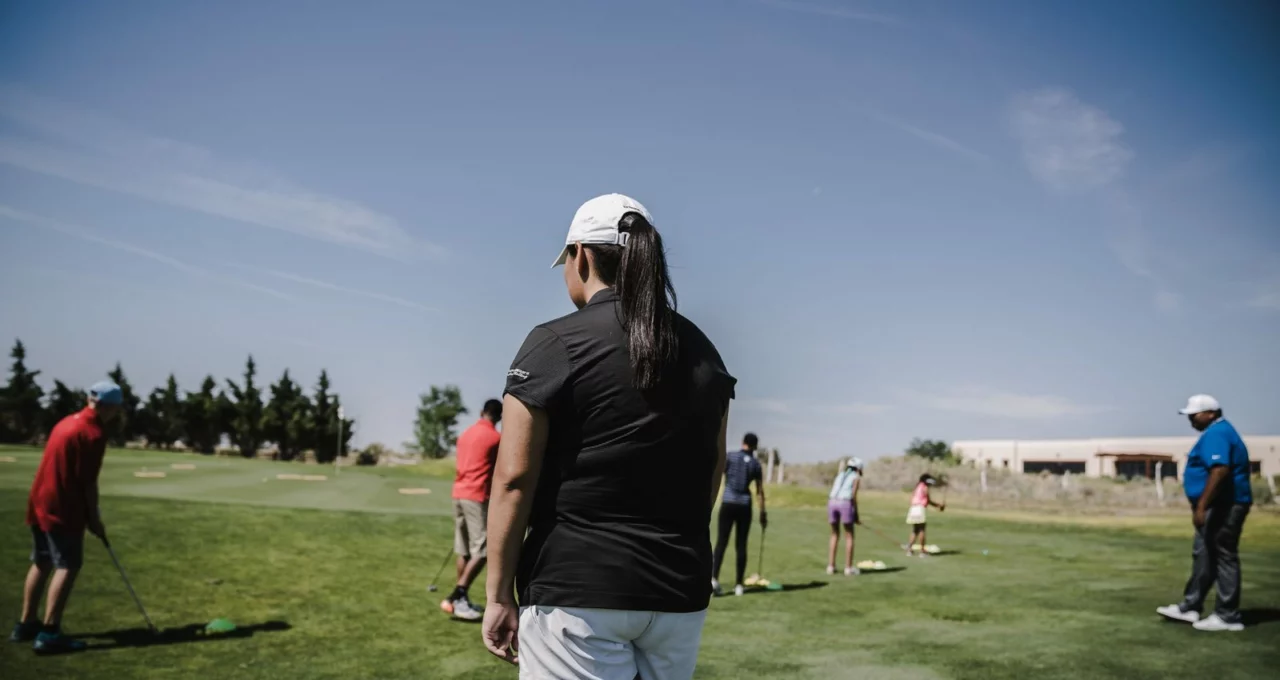
Everything you know about golf will be tempting to share. Hold almost all of it back. A first outing needs three things explained, once, before you tee off:
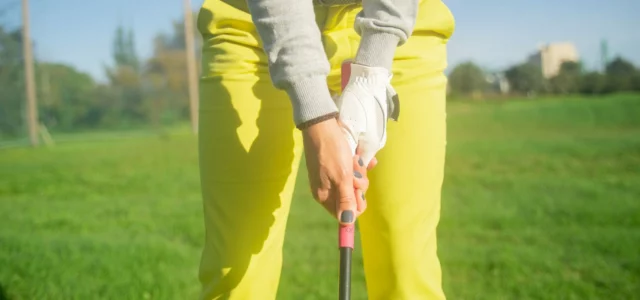
- How to hold the club, with a quick look at the grip and setup, and nothing about the backswing.
- Where to stand when somebody else is hitting: beside and slightly behind the ball, well out of the swing, never ahead of it.
- What “fore” means. Shout it if your ball heads towards anyone, and cover your head if you hear it.
After that, stop teaching. A new player can take in one idea at a time, and the tips you pass on at the fourth hole are usually the ones a coach will spend a month undoing.
Keep quiet after the bad ones
The hardest discipline of the day is silence after a duffed shot. Your guest saw it happen. They do not need an explanation, a sympathetic sigh or a suggestion about their head position. They need you to walk towards the next shot as if nothing happened.
Praise works in the opposite direction. “Good contact” after a clean strike, even one that finished in the rough, is the sentence that brings people back. Say it every time you mean it and say nothing else.
If your beginner asks what went wrong, give a one-line answer and leave it there. When they ask whether they should get lessons, which usually comes a few holes in, say yes and tell them why: a qualified coach will do in half an hour what you cannot do in a year of weekends.
Clubs, balls and what not to buy yet
Leave most of your bag in the boot. Four clubs are enough for a par-3 or nine-hole course: a hybrid, a 7-iron, a wedge and a putter. Handing somebody a full set of fourteen clubs gives them a decision to make before every shot and no idea how to make it. If they are left-handed and you are not, hire a set at the counter.
Bring old balls, a handful of them, and tell your guest in so many words that losing every one of them is fine. Fear of losing a ball makes new golfers swing slowly and carefully, and the ball goes into the water anyway.
Tell them not to buy anything yet. Not a set, not shoes, not a glove. Trainers are fine on a public course in dry weather. Buying can wait until they have played a handful of times and know they want to keep going.
A few courtesies, no rulebook
Keep etiquette to what affects other people. Stay still and quiet while someone swings. Walk around a putting line, not across it. Rake the bunker after playing from it and fix the mark the ball leaves on the green. That is enough for day one.
Group behind? Wave them through before your guest has even noticed them. Doing it early and with a smile shows a beginner that letting people play through is ordinary, not a public admission of being slow. The two habits worth passing on for pace of play are simple: pick up once the hole has gone badly, and carry two or three clubs to the ball instead of walking back to the bag.
What comes after the first round
If they come off the ninth green smiling, point them towards structured lessons rather than straight into more rounds with you. Get Into Golf is the national adult beginner program run through Golf Australia, delivered at more than 360 venues. A typical course is five weeks of one-hour group sessions with a PGA professional, and equipment is provided. At Blackwood Golf Club in the Adelaide Hills, for example, the program costs A$175 for four one-hour lessons and a nine-hole session on the course.
The program is growing fast, especially among women. In January 2026, 2,526 people joined Get Into Golf nationally, the busiest month in its history, and 90 per cent of them were women. Golf Australia’s research also found that the number of participants who went on to get a handicap or join a club rose by 300 per cent. A group of complete beginners is a much more relaxed place to learn than a round with an experienced friend, however patient that friend is.
Between lessons, a bucket of balls at a driving range and a second nine holes at the same short course a fortnight later will do more than a new set of clubs. Panxis Golf has no commercial relationship with any course, club or program mentioned here.
Your checklist for the day
- A par-3 or council nine-hole course, booked for the last weekday tee times or an early weekend start.
- Ambrose as a team, or Stableford with permission to pick up.
- Four clubs, a pocket of old balls, sunscreen and water.
- Three instructions: grip, where to stand, what “fore” means.
- Silence after bad shots, praise after good contact.
- Get Into Golf or another group program as the next step, not another round with you.