A beginner’s first round: the host’s job
Most golfers who quit do so after one bad first round, and the friend who took them is usually responsible. Par-3 course, scramble format, three instructions, and nothing said after a bad shot.
In brief
- Not your course: a par-3 or a quiet nine on a weekday evening.
- Play a scramble so they hit second shots from the fairway.
- Teach grip, where to stand, and how to keep moving. Nothing else.
- Say nothing after a bad shot. They already know.
- Give them three cheap balls and tell them to lose all three.
Most golfers who quit do so after one bad first round, and the person responsible is usually the experienced friend who took them. Getting somebody’s first round right is a job with a method, and almost none of it is about golf instruction.
The reason it goes wrong is well intentioned. You want them to enjoy the thing you enjoy, so you take them to the course you like, on a day you are free, and you help. Each of those three decisions is the wrong one, and together they produce a five-hour afternoon that ends with somebody saying golf is not for them.
Choose the right course, which is not your course
A par-3 course or a quiet nine-hole layout on a weekday evening. Not your 6,800-yard home course on a Saturday morning with a group waiting on every tee.
The aim is that they hit shots and finish holes, and a short course delivers both inside an hour. On a par-3 course every hole starts within reach of the green, which means a beginner has a realistic chance on every single hole rather than on none of them.
Time of day matters as much as the course. Late afternoon on a weekday, when the sheet is empty and nobody is behind you, removes the single largest source of pressure a beginner feels, which is holding people up.
Play a scramble, not their own ball
Both of you hit, take the better ball, both play from there.
Your beginner gets to hit a second shot from the fairway instead of a fourth from the trees, they contribute a putt or two that genuinely helps, and nobody spends the evening looking for a ball in the rough. It is the single best decision you can make about the format and it costs nothing.
It also removes score entirely as a source of shame, because the score belongs to the team. If they ask what they would have shot, change the subject.
Teach three things and nothing else
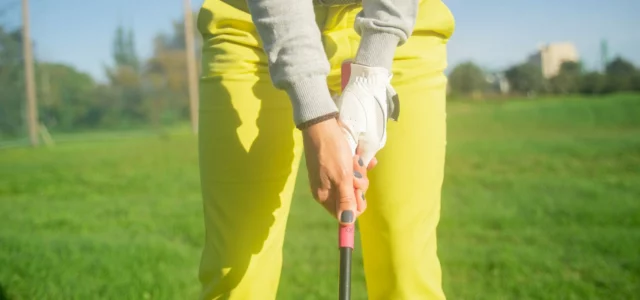
How to hold the club. Where to stand safely while somebody else swings. And how to keep moving: pick up when the hole is over, take two clubs to the ball, watch the flight of your own shot.
That is the entire syllabus for a first round. Every other piece of instruction you are tempted to give should wait for a professional, because a beginner cannot process more than one idea and because the ideas you offer will contradict the ones a coach gives them later.
If they ask a direct question, answer it briefly and stop. Volunteering is the problem, not answering.
Say nothing after a bad shot
This is the hardest rule and the most important one.
A beginner knows the shot was bad. They watched it. What they need is the next tee, not an analysis, and certainly not a diagnosis delivered in a kind voice.
Coaching a beginner mid-round is how experienced golfers turn a pleasant evening into an examination, and it is the most common single reason first-timers do not come back. Say nothing, walk to the next shot, and comment only when something goes well: “that was solid” after a good strike is worth ten corrections.
What to lend them and what to buy
Lend a half set. A 7-iron, a wedge, a hybrid and a putter is plenty for nine holes and considerably simpler than fourteen clubs, most of which they cannot use and all of which they have to choose between.
Buy them a sleeve of cheap balls and tell them, explicitly, to lose all three. That single sentence removes the fear of losing a ball, which is the thing that makes beginners swing tentatively and lose more of them.
Nobody should buy equipment before their fourth or fifth round. If they get that far and want their own set, a fitted used half set is the right first purchase and a full new set is the wrong one.
The etiquette that actually matters on day one
Stand still and quiet while somebody hits, and stand where you can see their hands rather than behind or in front of them. Do not walk across somebody’s line on the green. Repair your pitch mark, rake the bunker, and let a faster group through.
That is the whole list. Dress code, the finer points of the rules, and the etiquette of who plays first can all wait, and loading a beginner with them on day one is a way of communicating that this is a place with a lot of rules you do not yet know.
The one thing worth explaining before the first tee is what fore means and what to do when you hear it.
What to say when they ask about their swing
They will ask, usually around the fifth hole, and the honest answer is the most helpful one: that you are not a coach, that half an hour with a professional will do more than a season of your advice, and that everybody who plays well has had lessons.
This is true, it takes the pressure off both of you, and it points them at the thing that will actually work.
Where to take it from there in Britain
If they enjoyed it, the next step is a group lesson rather than another round. Group clinics at municipal courses and driving ranges are inexpensive, sociable, and teach the grip and setup properly before bad habits harden, and everybody in the group is equally new.
The PGA of Britain directory lists teaching professionals by location, and most public facilities run beginner clinics through the season. Programmes aimed specifically at adult beginners have spread in the past few years and are worth looking for by name at your local municipal.
Then a second nine-hole round two weeks later, same format, same course. Familiarity is worth a great deal on a second outing.
For their own set eventually, the used market through Golfbidder, GlobalGolf or a club pro shop’s trade-in rack gives a beginner far more club for the money than any new starter set. Panxis Golf has no commercial relationship with any facility, retailer or association mentioned here.
What to do about the group behind
The thing a beginner is most anxious about is holding people up, and it is the one part of the day you can manage entirely for them.
Book a time when nobody is behind you: late afternoon on a weekday, or the last hour of light. If a group does catch you, wave them through early and cheerfully, before your beginner has noticed them and started rushing. Do it once and they will see that it is normal rather than shameful.
Then give them the two habits that keep a group moving, and no more: pick the ball up when the hole has gone wrong, and take two or three clubs to the ball rather than the whole bag. Those two cover ninety percent of pace of play and neither requires hitting a good shot.
What you should not do is talk about pace during the round. A beginner who is told to hurry plays worse, takes longer, and remembers being hurried.
The plan, in one list
- Par-3 or nine holes, weekday evening, scramble format.
- Half a set of borrowed clubs and three cheap balls they are told to lose.
- Three instructions: grip, where to stand, keep moving.
- Nothing said after a bad shot, ever.
- A group clinic next, then a second nine at the same course.
Do it this way and they will ask when you are going again. Do it the other way and they will tell people golf is not for them, and they will be describing you rather than the game.
Where this shows up on a course
Three short or nine-hole courses from our directory, open to anyone.
- The Blackwell Grange Golf Club: A 1930 club in the grounds of Blackwell Hall above the Tees: conditioning reviewers call immaculate, greens they call tricky, and corridors ninety years of trees have narrowed.
- Woodham Golf & Country Club: A James Hamilton Stutt parkland course opened in 1981 on 229 acres of County Durham, formerly Rushyford: a par 73 of 6,688 yards with space between the holes.
- Musselburgh Links, The Old Golf Course: Nine holes inside a racecourse, documented since 1672 and holder of six Opens: the oldest golf course in the world, best played with hickories, and what visitors report.
We have not played these courses; each page says what it is based on.