Bringing a friend golfing for the first time: a Canadian game plan
New golfers rarely give up because the game is hard. They give up after one long, crowded, over-coached afternoon. Choose a short municipal course, a late weekday tee time and a shared score, then keep quiet.
In brief
- Book a par-3 or nine holes on a weekday evening, ideally from June.
- Rent or lend four clubs; buy nothing before the fourth or fifth round.
- Play a scramble so nobody owns a bad score.
- Teach grip, where to stand and keeping moving, then say nothing after bad shots.
- Follow up with a municipal or club clinic, then replay the same course.
Somebody at work has asked if they can come golfing with you. It is the best news the game gets all year, and it is also the moment most newcomers are lost for good. They rarely quit because golf is hard. They quit because their first afternoon was long, public and full of advice, and the golfer who organized it meant well at every step.
A Canadian season gives you roughly five months to get this right, which is less time than it sounds. Here is how to plan the outing so they ask about a second one before you are back in the parking lot.
Pick a short course, not the one you love
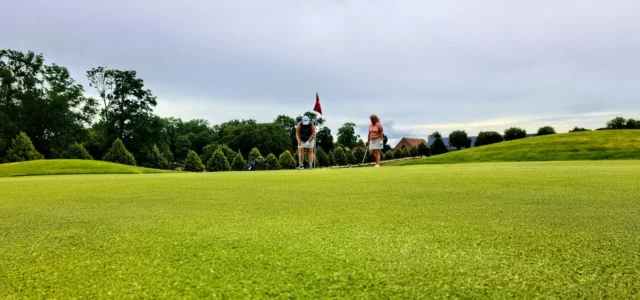
Your own club is the wrong venue. Its 6,500 yards, its Saturday tee sheet and its members waiting on the 1st tee are exactly what a new player cannot handle yet. Look instead for a par-3 layout or a pitch and putt, where every tee shot has a real chance of finding the green.
Most Canadian cities run one. In Toronto, Dentonia Park near Victoria Park station is an 18-hole, par-54 municipal course of 2,176 yards, and the City’s published 2026 rates put a weekday adult round at $31.49 before HST. It also sells a nine-hole round at $20.17 on weekdays, but only in the first 100 minutes of the day and at day’s end, which happens to be when the course is quietest. In Calgary, McCall Lake has a nine-hole par-3 course beside its main 18, at $18 a player every day in 2026, or $33 for a family of up to four.
If your town has no par-3, a public nine-hole course does the job. The test is simple: can a person who hits the ball 100 yards reach the green in three? If yes, book it.
Book the right hour of the right month
April and May are tempting because everyone is desperate to play, but early-season Canadian golf means cold hands, soft ground, wet feet and a first experience that feels like an endurance event. Wait for June, when evenings are long and warm.
Then choose a weekday tee time late in the afternoon. Toronto’s five municipal courses release tee times seven days ahead at ten-minute intervals; Calgary’s courses release them four days ahead at 10 a.m. Grab the last slots of the day and nobody will be standing behind you, which removes the thing beginners dread most: the feeling of holding up strangers.
Borrow the gear, and do not buy anything yet
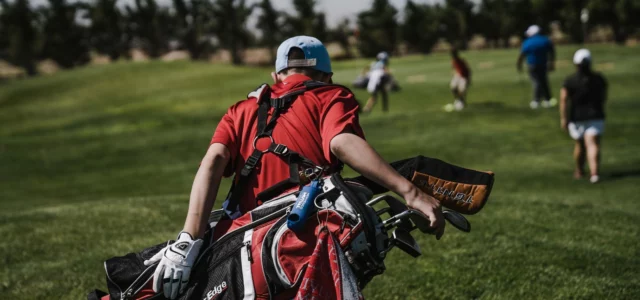
No new golfer needs fourteen clubs. Put four in a light carry bag: a hybrid, a 7-iron, a wedge and a putter. Fewer choices, fewer decisions, faster play.
If you have no spare set, rent at the course. Dentonia Park lists a full rental set at $17.50 with a pull cart included in 2026, and McCall Lake prices the family round with four sets of rental clubs at $37. That is cheaper than any starter set and commits your friend to nothing.
Pack a sleeve of inexpensive balls and hand them over with one instruction: these are meant to be lost, so lose them. Someone who is afraid of losing a ball swings carefully, and careful swings go sideways.
Use a format where the score is shared
Play a two-person scramble. Both of you tee off, you pick the better drive, both of you hit from that spot, and so on until the ball is in the hole. Your guest hits most of their shots from short grass rather than from the woods, and every so often one of their putts is the one you use. That feels like contributing, because it is.
Nobody keeps an individual score, so nobody has a number to be embarrassed about. If they want to know what they would have shot on their own, tell them it does not matter yet. It genuinely does not.
Keep instruction to three points
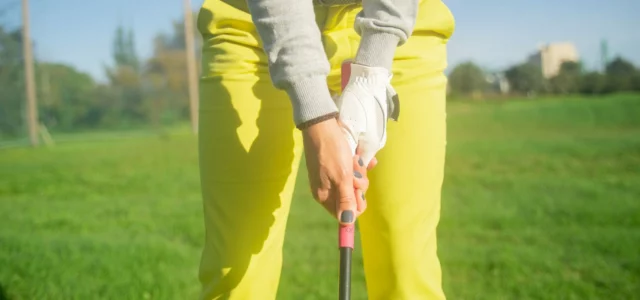
On the first tee, explain how to hold the club, where to stand when someone else is swinging, and how to keep moving between shots. Stop there.
Beginners cannot absorb a swing lesson while walking a course, and anything technical you tell them may clash with what a coach says later. If they ask you something directly, answer in one sentence. The trouble comes from advice they did not request.
Teach the word fore before the first swing, including the only correct reaction to hearing it: crouch, cover your head, and do not look up to find the ball.
Stay silent after the bad ones
This is the discipline that separates a good host from a bad one. After a topped shot or a whiff, say nothing and walk. They saw it. A gentle “you lifted your head” does not help; it tells them someone was watching and grading.
Save your voice for the good moments. “Great contact” after a clean strike does more for a new player than any correction ever will, and it builds the memory you want them to leave with.
Handle pace for them
If a group does appear behind you, invite them through straight away and with a smile, before your guest notices and starts rushing. Do it once and they learn that letting people play through is ordinary course manners, not a verdict on their ability.
Beyond that, two habits cover almost all of pace of play for a novice: pick up the ball once a hole has got away, and carry two or three clubs to the ball instead of walking back to the bag. Never ask them to hurry. Hurried beginners take longer.
The day-one etiquette list is short: be still and quiet while others hit, do not walk across someone’s putting line, repair your ball mark, and rake the bunker. Dress codes and honours can wait for another summer.
The swing question on hole five
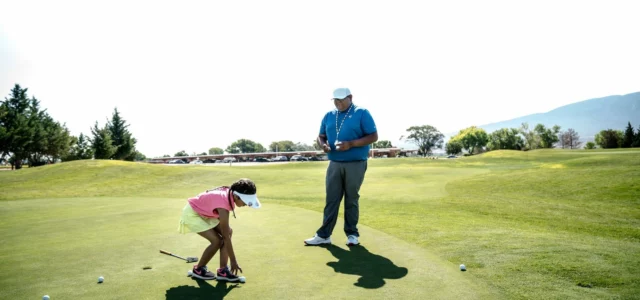
Sooner or later they will ask what they are doing wrong. Tell them the truth: you are not a teacher, and one lesson with a professional is worth more than a season of your tips. Every good golfer they have ever watched had coaching. That answer is honest, lets you both off the hook, and points them to what works.
Where to go next in Canada
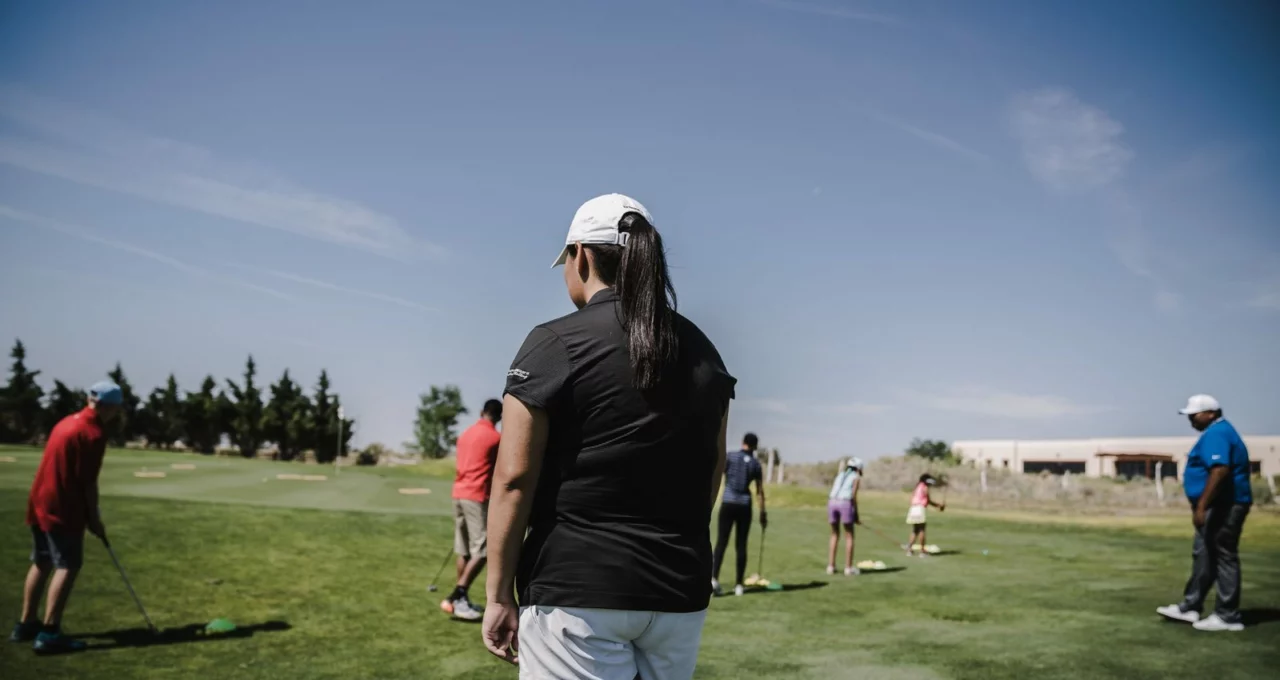
If they enjoyed the evening, the next step is a group clinic rather than another round with you. Clinics are cheap, social and full of people at the same stage.
- Municipal programmes. The City of Toronto said it would run 30 free learn-to-golf clinics for juniors, women and seniors at its courses in 2026. Check your own city’s parks and recreation golf page in spring, since these fill quickly.
- Club clinics. Many courses run a five-week format. Canadian Golf & Country Club in Ashton, near Ottawa, offered its 2026 “Get Golf Ready” series as five one-hour lessons for $159 plus tax, with at most six students per instructor.
- A professional. The PGA of Canada’s Find a Pro directory lists certified professionals by region, and the provincial zones run their own versions.
Two weeks later, play the same short course again in the same format. Familiar holes make the second outing far easier than the first.
When they start to get hooked
Suggest the free Golf Canada app. It shows distances on more than 1,500 Canadian courses and keeps scores. When they eventually join Golf Canada for a Handicap Index, reassure them that a high number is normal: the World Handicap System allows an index up to 54.0, and the figure settles once 20 scores are on file.
Hold off on equipment until the fourth or fifth round. When the time comes, a secondhand half set from a used-club specialist, the used and demo clubs at a national golf chain or a club pro shop’s rack gives far better value than a boxed starter set, especially once someone has had a first lesson on grip and setup and a few range sessions. Panxis Golf has no commercial relationship with any facility, retailer or association mentioned here.
The short version
- A par-3 or nine holes, a weekday evening in June or later.
- Four borrowed or rented clubs and a few balls they are told to lose.
- A scramble, so the score belongs to both of you.
- Three instructions, and silence after every bad shot.
- A group clinic next, then a return visit to the same course.
Get the first evening right and golf gains a player for decades. Get it wrong and they will say the game was not for them, when what they really mean is the afternoon was not.