Winter greens and frozen greens: how to read them, how firm to putt and what the Rules allow
From November on, northern greens turn slow, sandy or frozen, and Sun Belt greens go dormant or get overseeded. Here is why the course holds you on the first tee when there is frost, what the Rules let you do on a winter green, and how to adjust your putting and chipping.

In brief
- USGA Green Section guidance says frost makes grass brittle, that a foursome takes 300 steps or more on each green, and that damaged turf can need more than a month to recover.
- A 2024 USGA-funded Oregon State study found no damage from foot traffic on frosted annual bluegrass greens, but carts and rolling did harm, and courses are told to test before dropping delays.
- You may not brush frost off your line (Rule 8.1a), aeration holes are not damage you can repair (Rule 13.1c), and preferred lies under Model Local Rule E-3 never reach the putting green.
- On slow, damp greens, roll putts past the hole with less break. On frozen ones, land chips short and let them run. On bermudagrass, shiny grass means down grain and a faster putt.
Somewhere around the second week of November, the greens at most northern courses stop behaving like the greens you learned on all summer. The ball checks up on the first bounce, then skids on the next approach as if it landed on a parking lot. A putt you would have tapped in July dies two feet short and wanders off line through a patch of sand you did not see. Meanwhile, in Arizona or Florida, a golfer who flew south for a week is wondering why the green has turned a brighter shade of green than the fairway around it and why every putt down toward the setting sun runs past. Winter putting is its own game, and it comes with its own rulebook questions: can you brush the frost off your line, can you repair an aeration hole, and what exactly is that cup cut in the middle of the fairway? This guide covers what changes on the surface, why the starter keeps you in the clubhouse on a frosty morning, what the Rules of Golf actually allow, and how to adjust your putting and your approach shots until spring.
What happens to a green between November and March
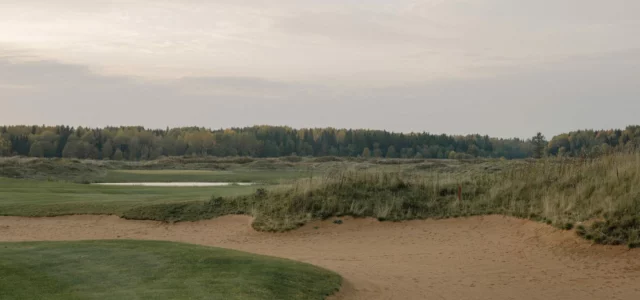
On a cool-season course, the kind you find across the North and the Midwest, the grass on the greens slows its growth as the soil cools. The surface gets slower, and with rain and short days it stays wet longer, so the ball rolls out less than you expect.
Many of those greens have also just been aerated. The USGA Green Section has explained for years why superintendents punch holes in greens in the fall, when the greens look their best: the turf recovers quickly at that time of year and goes into winter with a stronger root system. The same agronomists warn that aerating too late in the fall, once the soil is too cold, can leave greens that do not recover until the following May or June. So if your course aerated late, you may be putting through sand and small holes for weeks.
Then comes the cold. A frozen green is firm on top and does not take a ball mark, so approach shots bounce as they would on a cart path. A green that has thawed on the surface while the soil underneath is still frozen is the opposite. It is soft and sticky, it takes deep footprints, and the USGA warns that traffic on it can shear the roots at the line between the thawed layer and the frozen one, damage that often does not show until spring.
Why the course makes you wait for the frost to go
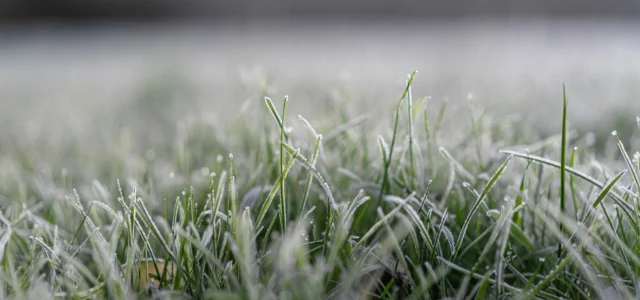
Nobody likes a frost delay, and the reason behind it is easy to miss because the green looks fine. When frost forms, ice crystals form inside the grass plants and make them brittle. In its guidance for golfers, the USGA Green Section says that walking on that crunchy grass can damage the plants, that the damage may not show right away, and that it can take the grass more than a month to recover. It also points out that a foursome typically takes 300 steps or more on each putting green, which is why the closely mown surfaces get the strictest protection.
Two other points from the same guidance explain the delays that seem unfair. Frost lingers in cold, shaded pockets long after the rest of the course has thawed, and if it remains on a hole you have to play early in the round, the course cannot open. The shade from a few trees can keep an entire course closed.
The science is not frozen in place either. A USGA-funded study at Oregon State University, published in the Green Section Record in March 2024, put foot traffic on annual bluegrass greens on eight frost mornings in February 2022 and found no damage. The researchers did not tell courses to scrap their delays. Carts were another story, since a single cart pass on frosted creeping bentgrass caused noticeable injury, and rolling the greens on frost mornings reduced their quality. They concluded that a delay might be unnecessary for walking golfers on that grass when no maintenance is planned, and they recommended that each course test its own turf before changing its policy. So when your course holds the first tee until the frost lifts, it is following the advice that still stands.
What the Rules of Golf say about a winter green
The Rules do not have a winter edition, but several of them matter more in cold weather than in summer.
Frost and dew stay where they are. Under Rule 8.1a, you may not remove dew, frost or water if doing so improves the conditions affecting your stroke. The one exception is the teeing area, where Rule 6.2b(3) lets you remove them before you play. On the putting green, Rule 13.1c lets you remove sand and loose soil and repair damage, and frost is neither of those. Brushing a white streak off your line with a towel is not allowed.
Snow and ice are your choice. The definitions treat snow and natural ice, other than frost, as either loose impediments or, when they are on the ground, temporary water, and the choice is yours. You can remove a chunk of ice from your line as a loose impediment, or you can treat snow on the green as temporary water and take free relief under Rule 16.1d. Frost and dew are neither.
Aeration holes are not damage. Rule 13.1c lists what you may repair on a green, such as ball marks, spike marks and old hole plugs, and it says plainly that aeration holes, grooves from vertical mowing and damage from rain or other natural forces are not damage. You putt over them as they are. A Committee can adopt Model Local Rule E-4, which gives free relief under Rule 16.1d when your ball lies in or touches an aeration hole on the green. Even then there is no relief when the holes are only on your line of play, and the Model Local Rule says it should be withdrawn once the holes have healed.
No test putts during the hole. On a frozen morning it is tempting to roll a ball across the green to see what happens. Rule 13.1e forbids rubbing the surface or rolling a ball to test the putting green. Between two holes you may roll a ball on the green you have just finished, which is the legal way to learn something about the speed.
Preferred lies stop at the edge of the green. Winter rules usually mean Model Local Rule E-3, which lets you lift, clean and place the ball when it lies in a part of the general area cut to fairway height or less. It does not apply on the putting green, and the official guidance discourages using it beyond the fairway. Whatever the card in the cart says, on the green you play the ball as it lies.
Temporary greens and what they mean for your card
Many northern courses move winter play to temporary greens, often a hole cut in the fairway short of the real green, to keep traffic off the permanent surfaces when they are frozen or thawing. In competition, a Committee sets this up with Model Local Rule D-2. The temporary green is defined as the putting green in play for that hole, and the real green it replaces becomes a wrong green. If your ball lies on that wrong green or it interferes with your stance or swing, Rule 13.1f says you must take free relief and may not play it as it lies.
In a friendly game nobody will read you a Local Rule, but the principle is worth keeping. Treat the temporary cup as the hole, stay off the real green, and agree before the first tee on how you will handle a ball that finishes on it.
Your handicap may take a break as well. Under the World Handicap System, the authorized golf association in each area decides whether and when it observes an inactive season, and scores made at a course in its inactive season are not acceptable for handicap purposes. Washington Golf, for example, runs its inactive season from November 15 to March 1. In Ohio’s Miami Valley it runs from November 1 through March 31. The USGA reminds golfers who travel south that a round at a course in its active season must still be posted, even if the home course is closed for posting.
Reading and putting a slow, soft green
The biggest adjustment is simply speed. A slow, damp green takes less break than you expect, because the ball moves faster through the part of the putt where it would normally turn. Most golfers in winter leave putts short and below the hole, then read more break on the next one and leave that short too.
A few habits help. Pick a spot a little beyond the hole and roll the ball to it, so a putt that comes up short still reaches the cup. Play a bit less break than your summer eye tells you, and let pace carry the ball rather than trying to feed it in from high above. On a green that has been aerated and topdressed, a firmer stroke also keeps the ball from bouncing off line as it slows down over the sand and the holes.
Use the time between holes. Rule 13.1e lets you roll a ball on the green you have just finished, and two or three rolls there tell you more about the day’s speed on this course than the practice green did before you teed off.
Frozen greens ask for the opposite touch. When the surface is hard, a putt can run surprisingly far, and a downhill one can get away from you. Before you hit a long putt, look at how the ball behaved on your partners’ approaches. If they bounced high and released, the green is frozen, and you should cut your stroke down.
Approaching a green that is frozen, soft or slow
The short game follows the same logic. On a frozen green, a ball that lands on the putting surface will not stop, so land it short and let it run up. A low chip that lands on the fringe and rolls is easier to judge than a high pitch that lands on a frozen surface and keeps going. Our notes on the short game on firm winter ground go further on this.
On a wet, soft green, the problem flips. The ball stops where it lands and sometimes plugs, and a chip that would run out in summer stays short. Carry the ball closer to the hole, and repair your ball mark carefully, because a soft green takes deep marks. A cold ball and cold air also take some carry away, which is why the club that reached the middle of the green in September now finishes on the front edge. Our guide to golf balls below 50 degrees covers how much that costs.
Where winter greens play differently across the country
The North and the Midwest. From New England across to Minnesota, the courses that stay open after Thanksgiving tend to do so day by day. Expect frost delays on clear mornings, slow and sandy greens after fall aeration, and temporary greens whenever the ground is frozen or thawing. Call ahead or check the course’s social pages before you drive out, because the decision is often made at sunrise.
The Pacific Northwest. Where winters are wet rather than frozen, the challenge is more often water than ice. Greens can stay soft and slow for long stretches, and ball marks go deep. Putting firm and chipping with less roll than usual is the rule of thumb, along with fixing every mark you make.
The South and the Sun Belt. Many greens here are bermudagrass, which goes dormant in cold weather. Some courses overseed them in the fall with cool-season grasses, most often perennial ryegrass, sometimes mixed with Poa trivialis, so that a green surface stays in play while the bermudagrass rests. That is why an overseeded green in January can look and roll quite differently from the one you remember from a summer trip. Other courses, especially those with modern ultradwarf bermudagrass greens, skip overseeding because the USGA notes that forgoing it improves the health and spring green-up of the bermudagrass. On those, you may find covers on the greens after a cold night and a delay until they come off.
Bermudagrass also brings grain. In a GOLF.com instruction piece, Top 100 Teacher Trillium Rose explains that grass that looks shiny means you are putting down grain and the ball will roll faster, while grass that looks dark means you are putting into the grain and need a firmer strike. On a relatively flat green, she writes, the grain will almost always grow toward the west, and the ragged edge of the cup shows you the direction the grass is growing. A dormant bermudagrass green can also bring frost delays of its own. A USGA agronomist in the West Region notes that cart traffic on fully dormant bermudagrass during frost will likely not cause more damage than on any other day, yet still recommends the delays, partly because heavy frost makes footing slippery.
Before your next winter round
Check the course’s frost policy and whether it is on temporary greens before you leave home, and plan on a later tee time than the one you booked if the night was clear. On the first green, give every putt a chance to reach the hole and read a little less break than you see. Do not brush frost off your line, do not repair aeration holes, and keep your test rolls for the green you have just finished. Land your chips short on a frozen green and closer to the hole on a soft one. And if you are traveling south, look at the grass before you putt, because a shiny line toward the setting sun is the putt that will run past.
None of this makes a November green as good as a June one. It does mean the strokes you lose come from the weather, not from a rule you did not know or a putt you never gave a chance.