Shanking off firm spring lies? Why tight couch brings out the hosel and how to fix it
Firm couch and kikuyu fairways, sidehill lies that run the ball below your feet and the return of Saturday comps make spring prime time for the shank in Australia. There is only one thing going wrong at impact, and a short range session usually tells you which of five patterns causes it and which drill fixes it.

In brief
- In a shank the ball meets the rounded hosel instead of the face, so it launches almost sideways rather than curving like a slice.
- Tight spring lies tempt golfers to crowd the ball, firm slopes leave it below the feet, and comp nerves tighten the grip: all three push the club away from the body.
- Foot powder spray on the face, the hanging-arm check and one phone video from behind reveal your version in ten minutes; then pick the matching drill.
- Mid-round, stand a centimetre further back, sit in your heels and swing easy; check whether your club has adopted Local Rule E-5, and book a PGA pro through Find a PGA Pro.
You are 110 metres out on a firm spring fairway, the ball sitting down tight on couch that has only just woken up from winter. You pick a 9-iron, make what feels like a decent swing, and the ball squirts off at right angles, low and hot, into the gums on the right (on the left, if you play left-handed). Your playing partners go quiet. The next approach shot suddenly feels like defusing a bomb. If that sounds familiar, you are in good company: the shank tends to show up in clusters, and for a lot of Australian golfers it shows up in October and November, just as the comp calendar fills and the ground turns hard. It is fixable. There is only one thing happening at impact, a short list of reasons it happens, and a handful of drills that usually sort it out in a single session at the range.
One cause, every time
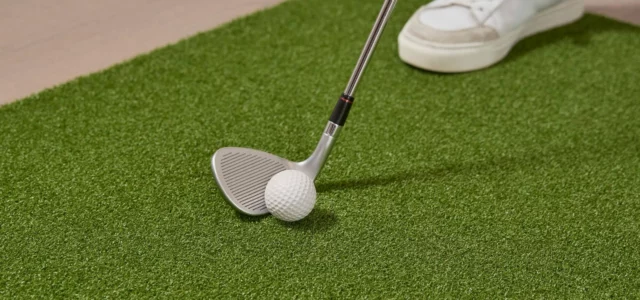
Look at any iron or wedge and follow the shaft down to where it bends into the clubhead. That rounded neck is the hosel. When you shank, the ball misses the hitting area of the face, or catches only the very edge of the heel, and makes contact with that curved neck instead. A round surface meeting a round ball sends it off almost sideways, which is why a shank does not bend like a slice or a hook. It simply launches in the wrong direction and keeps going.
Strip away every swing theory and the conclusion is the same: at impact, the clubhead was a couple of centimetres further from your body than it was when you set up. The neck of the club sat where the sweet spot should have been. Whatever fix you try, from a lesson to a drill to a quick thought on the tee, it has to do one of two things: stop the club drifting away from you, or bring it back closer.
That also explains why working on your slice will not cure a shank. A slice is a face that points right of the path, and the ball curves. A shank is a contact problem, and the ball barely curves at all. Treat them as separate faults.
Why spring in Australia brings it out
The shank does not care about the calendar, but the conditions of an Australian spring give it plenty of openings.
Tight lies on firm turf. Couch and kikuyu fairways that firm up after winter leave the ball sitting down with very little cushion under it. Many golfers react by trying to help the ball into the air, or by standing a touch closer to make sure they catch it cleanly. Crowding the ball leaves no room for the club to return to where it started, and the hands have to push outwards to get through.
Hard slopes. On firm ground the ball runs further on sidehill lies and finishes below your feet more often. To reach it, you lean forward, your weight sits on your toes, and the body drifts towards the ball during the swing. That is a classic shank recipe. Our article on grip and setup basics covers the posture that keeps you balanced when the ground is not flat.
The return of comp golf. After a quieter winter, Saturday comps, twilight rounds and club events come thick and fast. A card in your pocket adds tension, and tension is the shank’s best mate: a tight grip stops the forearms rotating, the face stays open, and the arms push away from the body to compensate.
Rusty routines. Ball position and posture drift over a winter of fewer rounds. Nobody notices until the first warm Saturday, when the ball sits a little nearer the toes than it used to and the hosel starts coming into play.
Ten minutes of detective work
Before you start changing things, find out which version you have. A short session at the range will tell you more than a week of guessing.
Read the face. Give the face of a 7-iron a light coat of spray-on foot powder, or use impact stickers, and hit five shots. Look at where the marks land. If they cluster towards the heel, close to the neck, your shanks are not random bad luck: you are living near the edge, and the shank is just the worst of a run of heel strikes. Fixing it will also improve the shots you thought were fine.
Test your distance from the ball. Set up normally with the 7-iron, then take your trail hand off the grip and let that arm hang loosely. It should drop roughly between your lead hand and your body. If it hangs well inside your hands, you are reaching for the ball. If your hands are almost brushing your thighs, you are standing too close.
Film one swing from behind. Prop your phone on the ground behind your hands, pointing along the target line. Compare the address position with the moment of impact. Do your hips move towards the ball? Does your head rise or slide forward? Two frames are enough.
Match the cause to the drill
Most shanks come from one of five patterns, sometimes two at once. Each has a drill that targets it. Start with half swings using a wedge or 9-iron, and only build up to full swings once the strike is clean.
Too close or too far away: the hanging-arm reset. If the detective work showed you are crowding or reaching, repeat the hanging-arm check before every ball for a full bucket. It feels slow. It also rebuilds a reference you can trust when the lie looks awkward.
Weight on the toes: heels down. This is the most common pattern among club golfers, and it gets worse late in a round when legs tire. Hit half shots with your toes lifted slightly inside your shoes, or with a spare club lying under the balls of your feet. If your weight cannot get onto your toes, your body cannot lunge at the ball. Hit ten like that, then ten normal shots trying to keep the same feeling in your heels.
Standing up through the shot: the bag behind you. When the hips thrust towards the ball on the way down, coaches call it early extension, and the arms get shoved outwards to make room. Stand with your backside just touching your golf bag or a chair placed behind you. Make slow rehearsal swings and keep that contact through impact. Once you can, add a ball and hit soft shots.
A path that heads outwards: the gate. Place a second ball, or a headcover, about 4 centimetres beyond the ball you are hitting, on the side away from your feet. Strike the near ball without touching the far one. If both move, the club travelled out. It is the classic shank drill because the feedback is instant, and it trains your eyes and hands to favour the toe side of the face. Some players get there from an over-the-top move, others from a club that arrives too far from the inside with the face open. Different path, same fix.
Tension: grip pressure at four. On a scale of one to ten, hold the club at about four. Firm enough to control it, soft enough for your forearms to turn over. Combine it with any drill above. On its own, this one change ends a surprising number of shanks.
A bonus trick for everyone: address the ball off the toe of the club rather than the centre. Plenty of shankers find they then strike it right out of the middle. It feels odd for a dozen balls, then it becomes a useful image to take onto the course.
Surviving a shank mid-round
The range is the place for drills. On the course you need a short list that gets you through the next shot without pulling your whole swing apart.
- Back off a centimetre. Stand slightly further from the ball. It is the quickest adjustment and the least likely to create a new problem.
- Settle into your heels at address and make a shorter, smoother swing.
- Focus on the inside of the ball, the part nearest to you. Where the eyes go, the club tends to follow.
- Club up and swing easy. Effort pulls the body towards the ball. A three-quarter swing at two-thirds pace rarely finds the hosel.
- Keep the wedge in the bag around the greens if a short pitch suddenly feels risky. On firm spring surrounds, a bump-and-run with a 7-iron or a putt from off the green keeps the neck of the club out of play. Our guide to three chipping shots shows the low runner that suits tight lies.
If a shank sails over the white stakes, the default under the Rules of Golf is stroke and distance. Since 2019 there has been an optional alternative, Model Local Rule E-5: where a committee has adopted it, you can drop near where the ball was lost or went out of bounds, including on the fairway edge, for two penalty strokes. Golf Australia’s guidance notes it is not available if you have already played a provisional ball. Plenty of Australian clubs use it, others do not, so check the local rules on the scorecard or the club noticeboard before you rely on it.
Where Australian golfers can get a shank fixed this spring
A PGA professional. Shanks are one of the faults a coach can usually diagnose in minutes, because the cause shows up clearly on video. The PGA of Australia’s Find a PGA Pro directory, on its website, lets you search by postcode for professionals near you, with options for individual lessons. When you book, say straight away that you are coming about a shank; it saves time and money. Before you go, read our guide to getting value from lessons so you arrive with the right questions.
Your club’s local rules. Golf Australia publishes guidance on Model Local Rule E-5 and the provisional ball restriction, but whether it applies on your course is up to your club’s committee. A quick look before the next comp saves an argument on the 7th tee.
A structured range session. Most driving ranges and many clubs have practice bays, and some now offer ball-tracking screens. Strike location is not always shown, but start direction is, and a shank leaves no doubt. Take foot powder spray and a spare ball, and you have a full test session for the price of a bucket. Our article on making a range session count explains how to structure it so the drills stick.
Practise off firm lies on purpose. If your shanks mostly appear from tight spring fairways, mats can hide the problem, because the club skids off the surface and slightly heavy contact still looks fine. Where your club allows it, hit a few balls from a closely mown practice area or the edge of the short-game area, and watch where the ball meets the face rather than where it finishes.
Your fifteen-minute shank plan
- Know the cause: the hosel arrives where the centre of the face should be. The club is further from you at impact than at address.
- Test first: foot spray on the face, the hanging-arm check, one phone video from behind.
- Pick the matching drill: hanging-arm reset, heels down, bag behind you, the gate, grip pressure at four.
- On the course: back off a centimetre, sit in your heels, look at the inside of the ball, club up and swing easy.
- Get help early: one lesson with a PGA pro usually finds the cause on video.
Next time you head to the range, pack a can of foot powder spray and a headcover. Coat the face, hit five 7-irons, and check the marks. If they sit near the heel, set up the gate and hit twenty half wedges without touching the outer object, then repeat the drill from the firmest grass you can find. That is a quarter of an hour, and for most golfers it ends the shank, or at least the dread of the next one, well before the fairways bake hard in summer.