From simulator bay to first tee: making Australia’s off-course golf boom count
Floodlit ranges, simulator bars and cocktail putt-putt have brought more Australians to golf than any membership drive. What turns a Friday-night bay into a golfer is a short, cheap first round, and the clubs that offer one.
In brief
- Golf Australia counts more than 1.5 million people at ranges, simulators and entertainment venues.
- A mat rewards contact but hides lies, wind, decisions and pace.
- 41.6 per cent of new club members are under 35, and 1.8 million regular players have no club.
- Short layouts such as Collier Park's three nines are the missing rung between bay and 18 holes.
- In winter, use simulator time for a carry chart, not eighty drivers.
On a Friday night at Moore Park in Sydney, the driving range stays open until 11 pm, every one of its 60 bays tracks the ball with Trackman, and the peak rate for an hour and 120 balls is A$42 (September 2026). Across the country in South Perth, Collier Park runs a floodlit, licensed range next to a mini golf course. In Chermside or Eastland, groups book Holey Moley for cocktails and nine holes of themed putt-putt. None of this looks like a Saturday medal, and all of it counts as golf in Australia now.
Golf Australia’s 2024-25 participation report put the number of people hitting balls at driving ranges, indoor simulators and entertainment-style venues at more than 1.5 million. The governing body’s line is that “all golf is golf”. The more useful question for a player, and for a club, is what happens after the bay.
The after-dark menu
Off-course golf in Australia comes in three broad shapes, and they suit different people.
Tech-equipped ranges. These are the closest thing to real practice. Moore Park’s 60-bay range has an all-weather synthetic surface, Trackman in every bay, simulated water and sand targets and a big screen for sport. Bookings are required and priced by time: in September 2026, 30 minutes with 60 starting balls cost A$22 to A$26, and 90 minutes with 180 balls A$50 to A$58, depending on off-peak, standard or peak hours. A driver can be hired for A$13 if you turn up without clubs.
Simulators. An hour in a bay with a screen and a choice of famous courses. In WA, GolfWA keeps a public list of simulator venues, including Lights Out Golf at Wangara, Pin High Indoor Golf, Outta Bounds, the Perth Golf Centre at The Western Australian Golf Club and SWISH in Bunbury. GolfWA notes that most offer dozens of courses, from St Andrews to Royal Melbourne.
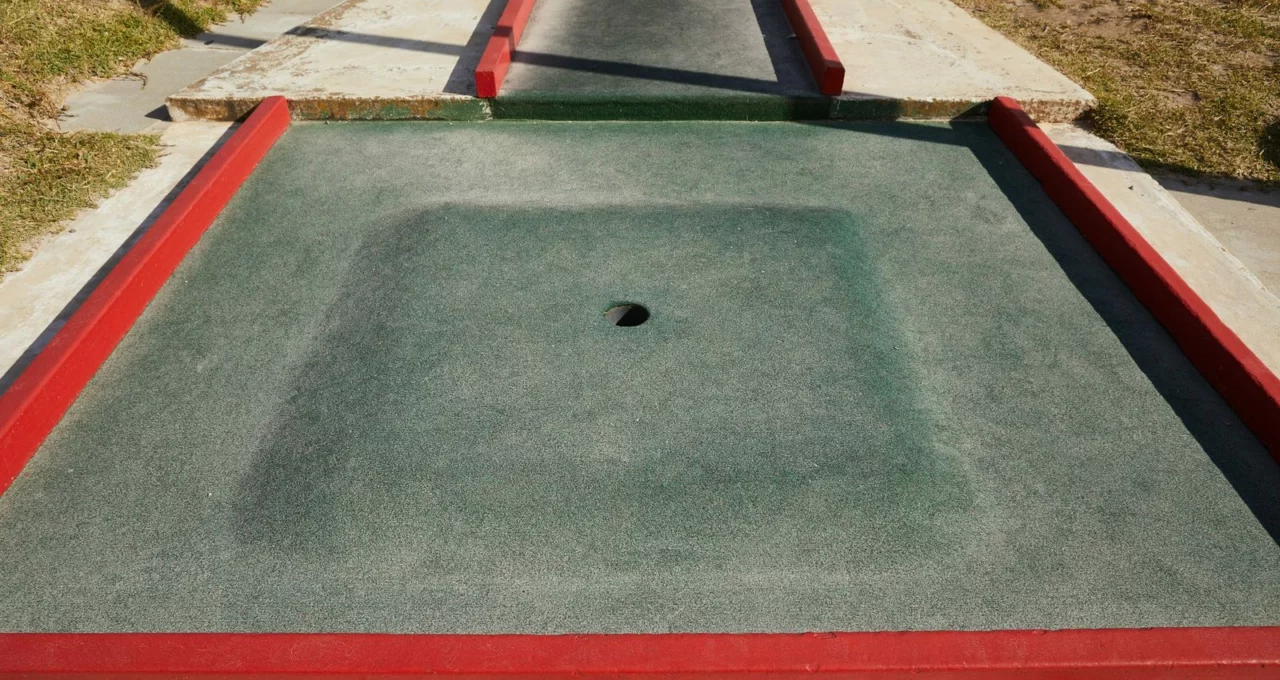
Mini golf with a bar. Holey Moley, part of the Funlab group alongside Strike Bowling and Archie Brothers, sells putt-putt as a night out: themed holes, drinks and share plates. In September 2026 its site advertised an A$59 bottomless brunch with two hours of unlimited mini golf, and A$14 school-holiday rounds for kids.
What a mat can and cannot teach
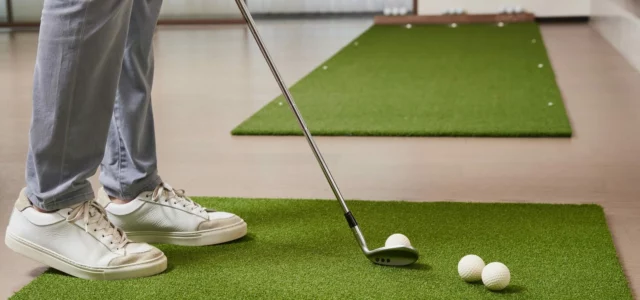
A bay is honest about one thing: whether you made contact. Ball speed, launch and carry appear on the screen straight away, and for somebody who has never swung a club that feedback is gold.
It stays silent about most of what makes golf hard. A mat forgives a heavy strike that couch or kikuyu would punish. The ball sits perfectly on every shot. There is no sidehill lie, no gusting sea breeze, no decision about whether to lay up short of the creek, and no group waiting on the tee behind you. A shot that finishes 40 metres offline costs nothing, so the loop between a bad swing and a bad score never closes.
That does not make the bay useless. It makes it half the picture. The contact you built on the mat is real; the course is where it gets tested.
Why clubs should care about the bay crowd
The same Golf Australia report explains why off-course players matter to the traditional game. Club membership rose to 477,220, the fifth straight year of growth. Of the new members, 41.6 per cent were under 35, double the share among existing members. And 1.8 million Australians play on a course regularly without belonging to a club.
Golf Australia’s response was Golf Australia Club, a subscription that gives non-members an official GA Handicap, insurance and the Golf Australia app. Social and virtual memberships grew 14.8 per cent in the year, four times faster than traditional membership.
Put together, the numbers describe a ladder: bay, short course, handicap, perhaps a club. Not everyone climbs it. Plenty of people want the Friday-night bay and nothing more, and they are customers rather than failed recruits. But the clubs that grow are the ones that put a low first rung within reach.
Short courses: the missing rung
The gap between a bay and 18 holes is not skill. It is time, cost and nerves, and short courses shrink all three.
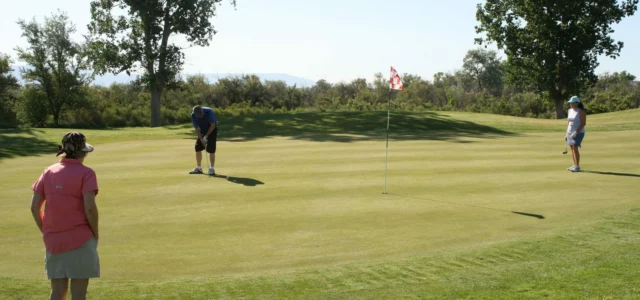
Collier Park in South Perth is a working model. It has 27 holes laid out as three separate nines, and no membership is needed to play them. The floodlit range, the mini golf and the PGA coaches sit on the same site, so a group that starts with a bucket can book a first nine without changing venue.
The Vines Resort in WA announced in 2025 a 14-hole short course of par 3s and par 4s, built into its existing Lakes holes, with a round estimated at about two hours and 20 minutes and public access planned from early summer 2026. The resort described short courses as a pathway for new players, including women, juniors and seniors who find 18 holes daunting.
In Sydney, Moore Park itself is in transition: since 1 July 2026 it has been playing as a 10-hole course while the NSW Government turns 20 hectares into parkland, with an interim 12 holes expected around October 2026 and the works planned to finish in 2028. A shorter public loop next to a busy range is, by accident or design, exactly the step a bay player needs.
Your first nine after the simulator
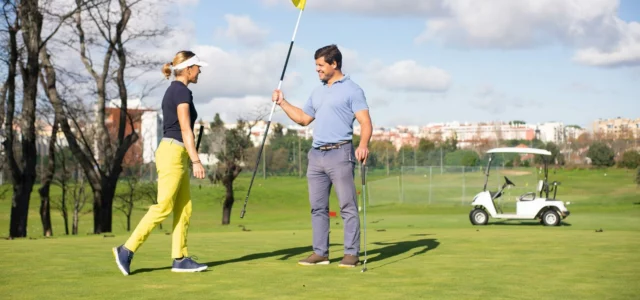
If your golf so far has happened in a bay, you already own the hardest skill in the game, which is hitting the ball. Here is how to take it outside without drama.
- Pick a quiet slot on a short layout. A weekday twilight nine at a public course is the gentlest introduction there is. Book online; many public courses, Collier Park included, take bookings only that way.
- Travel light. A hybrid, a 7-iron, a wedge and a putter handle a short course. Public courses such as Collier Park hire out a whole set or just a couple of clubs.
- Keep up rather than score. Nobody minds a beginner who walks briskly, picks up after too many shots and repairs pitch marks. Behaviour is the standard, not ability.
- Know four rules. Teeing between the markers, the provisional ball when a shot might be lost, relief from a penalty area, and the unplayable lie. The official Rules of Golf app covers the rest.
- Slip, slop, slap. Twilight in an Australian summer still means strong sun for the first holes. Hat and sunscreen go in the bag before the balls do.
Making simulator hours count in winter
From June to August in the south, a simulator can be proper practice rather than a pricey habit. The difference is a plan.
Use the bay to build a carry chart: ten shots with each club, note the average carry in metres, and write the gaps down. Test one change at a time, ten balls before and ten after, and trust the numbers rather than the feel. Play a simulated round and make every club choice as if a card were at stake.
What does not help is the default setting of almost every bay in the country: eighty drivers in a row because the screen shows distance. It feels productive and changes nothing on Saturday.
Where to start in Australia
For a structured step from bay to course, the national beginner program is Get Into Golf. Golf Australia’s latest report shows it up 10 per cent, with women making up almost 88 per cent of participants. At Eastwood Golf Club in Kilsyth, Victoria, for example, it runs as five one-hour sessions in small groups with equipment supplied.
In WA, GolfWA runs free beginner clinics funded with partners including Healthway, and its simulator page is a quick way to find an indoor bay near Perth. In Sydney, Moore Park’s range and its coaches share one site, so a lesson and a bucket can be booked in the same place. For a first round, look for the public nine-hole courses in your council area: they are the cheapest and least intimidating golf you can buy.
Panxis Golf has no commercial relationship with any venue, course or program named here.
The short version
Entertainment golf has put a club in the hands of more Australians than any membership drive ever did. A bay builds a swing; nine holes on grass build a golfer. If you play indoors, book a twilight nine. If you run a club, make that nine easy to find, cheap to play and friendly when people arrive. The door is already open. The job is to stand on the other side of it.