Water, chemicals and what courses actually changed
Brown fairways in August are a sign of a course managed well, not a course in trouble. The useful question is not whether golf is good for the environment but whether a given property is better run than last year, and that has an answer.
In brief
- Irrigation is the largest environmental cost, and the source matters as much as the volume.
- Firm tan fairways run further, drain better and need less fungicide.
- Spraying has moved from the calendar to measured disease pressure.
- A third of a course is out of play, and that is where the ecological value sits.
- Repair pitch marks, keep carts off wet ground, and stop complaining about brown.
Golf uses land, water and chemicals, and the industry has spent twenty years being told so. What has actually changed on the ground is more interesting than either the criticism or the defense, and most of it is visible on the courses you already play, if you know what you are looking at.
This article is about that: what a superintendent is doing when a fairway goes tan in August, what the spray programme looks like now compared with a decade ago, and which questions actually distinguish a well-run property from a brochure.
Where the water goes
Irrigation is the single largest environmental cost of a golf course, and it is also the area superintendents have worked hardest on, partly from conviction and largely because water in the American West is expensive and increasingly rationed.
The visible signs of a course managing it well are counterintuitive to a member: fairways that go brown at the edges in August, rough left unwatered, and irrigation heads adjusted so they no longer throw a full circle into ground nobody plays from. A course that is uniformly green from fence to fence through a dry summer is a course spending water on the parts of the property that do not affect a single shot.
The two structural changes underneath are drought-tolerant grasses and zone-by-zone irrigation control. The USGA has funded turfgrass research on water use for decades, and the practical output is cultivars that survive on less and control systems that water a specific area for a specific number of minutes rather than running a whole hole.
Source matters as much as volume. A course irrigating from recycled municipal effluent, a lake that captures its own runoff, or a well under a permit that limits it is in a different position from one drawing potable water, and that is a fair question to ask.
Brown is not neglect
Firm, tan fairways run further, drain better, resist disease and need less water and less fungicide. They are also, by most measures, better golf: the ball reacts, the ground becomes part of the shot, and the course plays the way links golf has played for centuries.
They also look, to an eye trained on televised tournament golf, like a course in trouble. Tournament conditioning is a fortnight of extraordinary effort and expense that no club can sustain for a season, and members who compare their course in August with a major championship in June are comparing two different things.
Member expectation is one of the genuine obstacles to reduced water use, and it is a solvable one. The clubs that have got past it are the clubs where the superintendent explains what is happening in the newsletter in June, before the complaints start in August.
Chemicals: less, and more precisely
Fungicide and herbicide use has moved from calendar spraying, which treats a whole property on a schedule regardless of conditions, to targeted application driven by weather models and measured disease pressure.
Greens still get treated, because losing a green closes a hole for a season and costs more than any programme. But fairways and rough increasingly do not, and the reduction there is where most of the total decrease has come from.
Integrated pest management is the term of art and it is not a euphemism: it means monitoring, thresholds, cultural practices such as mowing height and airflow first, and chemistry only when the threshold is crossed. Ask your superintendent what the annual programme looks like now compared with ten years ago. Most are pleased to be asked, and the ones who are doing it well have the numbers to hand.
The regulatory picture varies by state, and several states and municipalities restrict specific products or require certified applicators and posted notice. That is worth knowing as a member rather than as a critic: it is why the signs appear on the first tee.
The land that is not in play
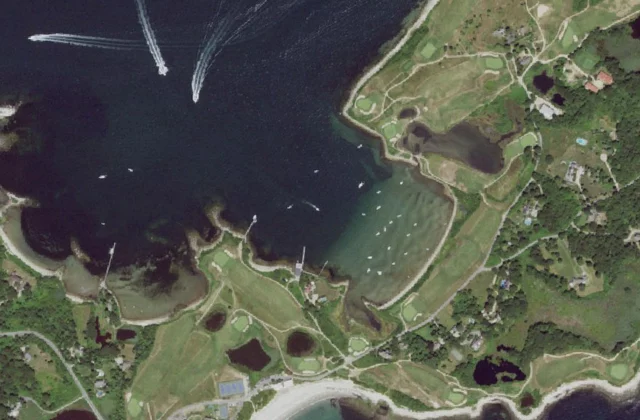
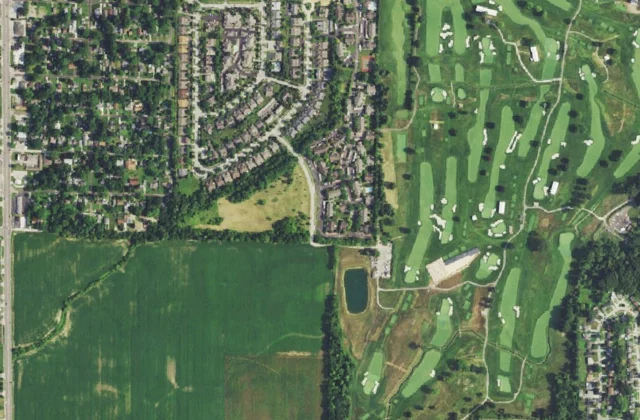
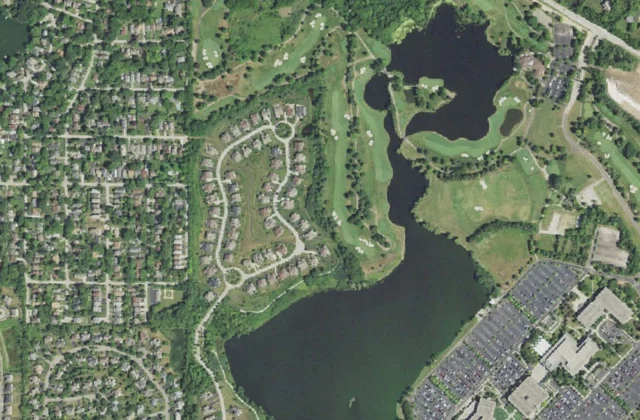
A typical eighteen-hole course has a third or more of its acreage out of play, and what happens on that third is where most of the ecological value sits.
Native rough, wooded corridors, ponds left unmanicured, unmown edges and buffer strips beside water support far more wildlife than a mown fairway ever will, and they cost less to maintain than turf. Converting maintained rough to native areas is the single most common sustainability project in American golf, because it reduces mowing, fuel, water and labor at the same time.
The Audubon Cooperative Sanctuary Program for Golf certifies courses in the United States on exactly this basis, covering wildlife habitat, chemical use, water conservation and outreach, and the GEO Foundation runs an international equivalent. Certification is not a guarantee of virtue, but it does mean somebody outside the club has looked at the numbers.
The trade-off is honest and worth stating: native areas mean lost balls, and a club that converts twenty acres of rough will hear about it. Slower play in the first season is a real cost, and the courses that manage it well keep the native areas away from the primary landing zones.
Golf’s other footprint: mowing, fuel and labor
The part nobody discusses is the equipment. Maintaining a golf course means several hundred hours a week of mowing in season, and the shift to electric and hybrid mowers on greens and tees is the quiet change of the past decade. It is driven as much by noise ordinances and early-morning starts as by emissions, but the effect is the same.
Labor shortages have pushed in the same direction. A course that cannot staff a full crew mows less, and mowing less turns out to be compatible with better golf on the parts of the property that matter.
What a player can actually do
Very little of this is in your hands, but not none of it.
Repair your pitch mark, and repair a second one. A pitch mark repaired within minutes heals in a day; one left for a week leaves a scar that lasts a month and is treated with more inputs, not fewer.
Keep carts off wet ground and observe the ninety-degree and path-only rules. Compaction is the reason for half the aeration you complain about, and cart traffic on soft ground is the largest single cause of it.
Fill your divots with the mix provided, take one less bucket of range balls than you were going to and hit them with a purpose, and stop complaining about brown fairways in August. That last one is a genuine contribution and it costs nothing.
The honest limits
A golf course is not a nature reserve. A course built on drained wetland, or an irrigated eighteen holes in a desert that receives seven inches of rain a year, does not become sustainable because it recycles its water and has a bird box on the twelfth.
The useful question is not whether golf is good for the environment, which is not a question with a single answer, but whether a given course is better managed this year than last. That question has a real answer, the superintendent knows it, and the answer is usually more encouraging than the public argument suggests.
Worth asking at your club
- Where does the irrigation water come from, and has total usage fallen over five years?
- What proportion of the property is out of play, and how much of it is unmanaged native area?
- How has the spray programme changed in ten years, and what is treated now that is not on a calendar?
- Is the course certified by Audubon, GEO or a state programme, and when was it last reviewed?
- What is the plan for the next drought restriction, and which parts of the course stop being watered first?
The answers tell you more about how a club is run than any brochure, and the clubs doing the work are usually delighted that somebody finally asked.